Before opening the decoration boxes, choose which parts of the room will change and which everyday pet spaces will stay usable. A holiday display has a footprint: the object itself, its supports, anything hanging from it, and the floor needed to install and remove it. Plan that whole footprint before deciding that a tree will fit beside the cat's perch.
This guide focuses on decorating a home shared with dogs or cats. The layout exercise below is an editorial planning suggestion, not a certification that a particular product or barrier is safe. Households with birds, rabbits, reptiles, or other animals need guidance suited to those species as well.
Start with a room that still works
Look at the room as it is used on an ordinary evening. Where does the dog stretch out? Which furniture does the cat use to move across it? Where do people carry laundry, open doors, or reach an electrical outlet? A display that fits the photograph may interfere with the actual household.
Choose a smaller arrangement if the larger one requires removing the pet's familiar resting place or narrowing the only practical route through the room. Keep necessary care resources accessible. Where visitors will also change how the space is used, pair the decorating plan with the guide to hosting guests around a pet's need for space.
Make three decisions on paper: the proposed display location, the animal's ordinary route, and where decorating supplies will be contained during the work. If those uses overlap, resolve the overlap before bringing everything in. An empty floor is easier to reconsider than a half-finished installation.
Evaluate the complete display
The ASPCA's holiday guidance advises securing a Christmas tree, preventing access to its water, keeping wires, batteries, and breakable ornaments away from pets, and avoiding tinsel. It also cautions about unattended candles and potentially harmful floral decorations. These concerns apply to the finished arrangement, not just the items while they are boxed.
Follow the actual support and installation instructions for the display you own. Consider how a pet could approach it from the floor and nearby furniture. Placing an object higher does not by itself resolve access in a home with a climbing cat. If dependable separation is not feasible, choose a different location or leave that item out.
Review a proposed access boundary before depending on it. The pet-gate and room-divider guide explains why an opening and an individual animal matter when selecting equipment. A decorative screen chosen for its appearance should not quietly become the household's containment plan.
Give unpacking its own work zone
Bring out one manageable selection of decorations rather than covering the floor with every box. Keep the animal comfortably separated from the active work and maintain its ordinary care. Designate a place for items awaiting a decision and another for waste. Put away unused pieces before moving to the next stage.
The FDA warns that tinsel, ribbons, and string can seriously injure a dog's or cat's digestive tract; it recommends skipping tinsel and collecting ribbons and string after gift opening. It also warns against animal access to salt-dough ornaments. Do not let the wrapping station or a children's craft project become an unexamined addition to the display.
Discuss that work-zone rule with the other people decorating. Someone carrying a box should know where it belongs without putting it beside the pet's bed temporarily. For children, agree which tasks an adult will supervise and who clears the materials afterward. One person's finished task should not leave the next person a floor full of loose pieces.
Review what changed after installation
Pause before restoring the animal's normal access. Check the room from the approaches you identified earlier, including furniture beside the display. Account for leftover fasteners, packaging, and removed decorations. Confirm that storage boxes are closed and put away, rather than becoming a new climbing route beside the installation.
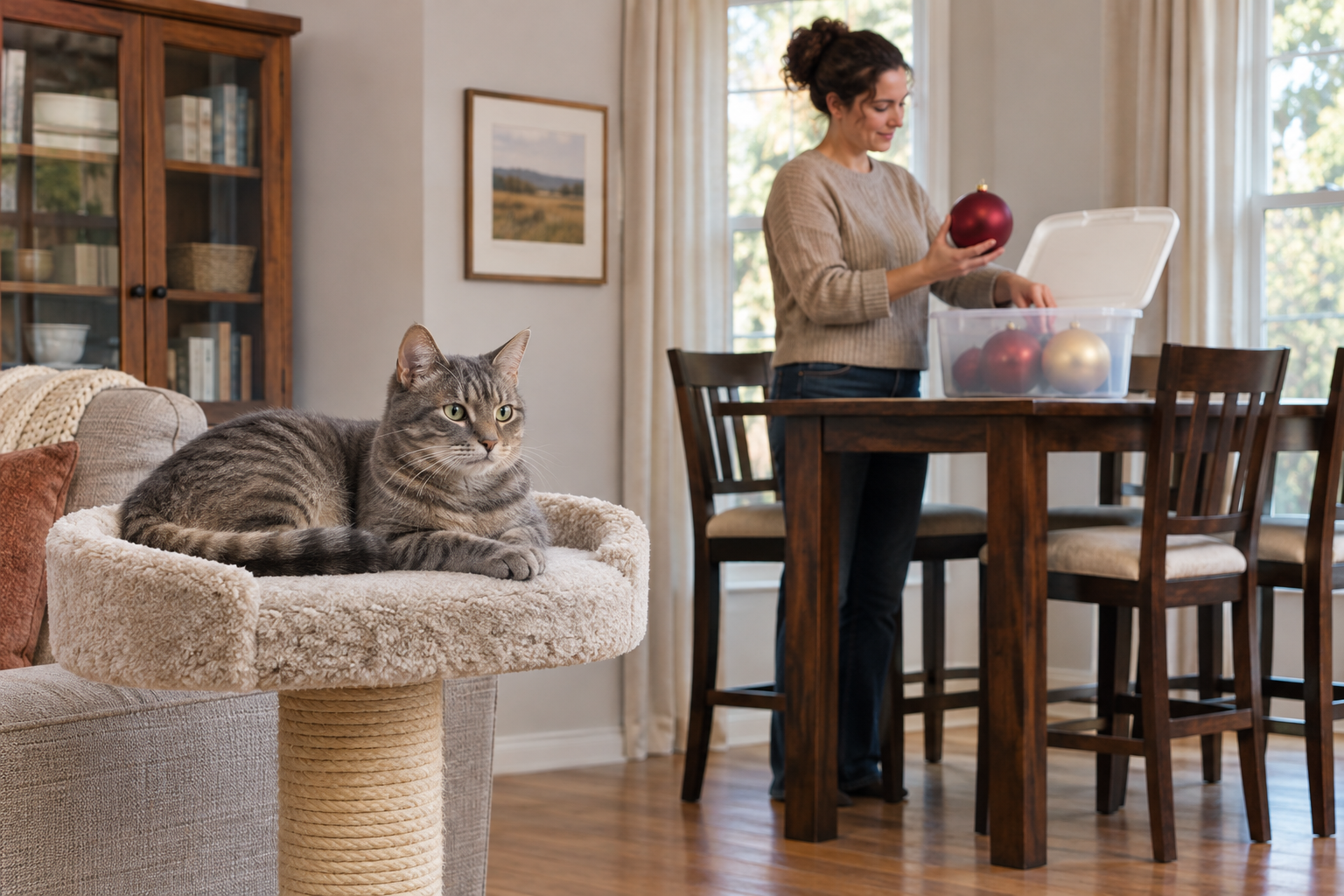
Consider a hypothetical room where a tree occupies the cat's usual corner. The family initially plans to move the perch beside it. On reviewing the arrangement, they choose a smaller display in a separate area and retain the familiar perch. The example illustrates a layout decision; it does not prove that every animal will leave a smaller display alone.
Assign someone to notice changes during the season. Has a decoration dropped? Has furniture moved closer? Is a previously closed door now being left open? Revisit the arrangement when the household changes rather than relying on the inspection made on decorating day.
Plan the pack-away before it arrives
Use the same contained work area when decorations come down. Decide where boxes will wait and who checks the cleared floor before normal access resumes. Keep the display instructions with the appropriate equipment so next year's arrangement begins with usable information.
If a pet may have swallowed or contacted something harmful, seek veterinary or animal poison-control guidance promptly. Do not wait for the room review to be complete. A thoughtful decorating plan keeps the home usable throughout the season, including the ordinary days between its most festive moments.
Editorial note: Prepared with AI assistance using the primary guidance linked above, checked November 10, 2026. The layout exercise and hypothetical example are Pet Living Magazine's editorial suggestions. No veterinarian reviewed this article. The featured image is an original AI-created planning scene, not a tested display or product endorsement.
Prepared with AI assistance and source checks. General editorial information; no veterinarian-review claim. Report a correction.