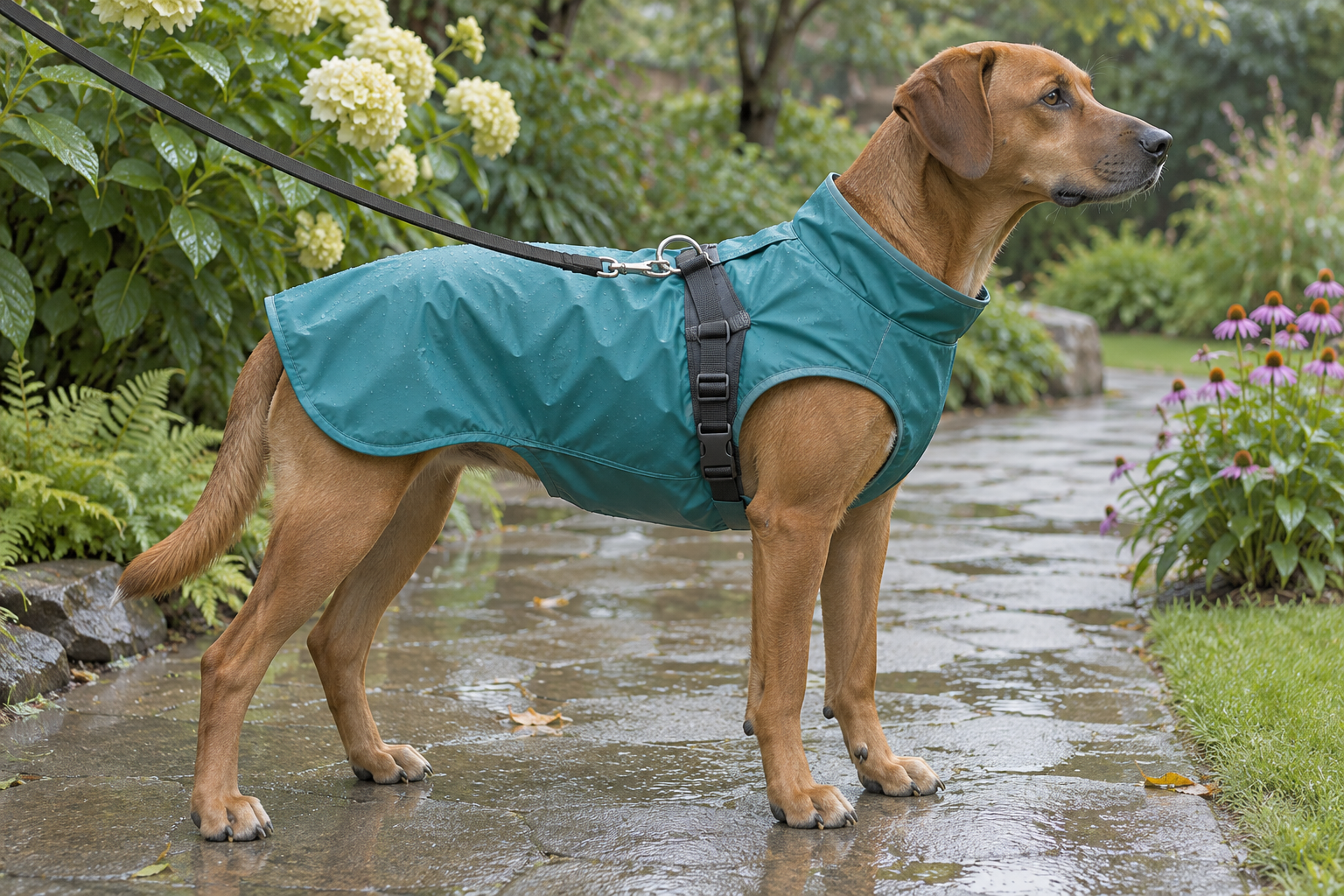
A dog raincoat should solve a particular problem: perhaps an exposed section of an ordinary walk or a coat that becomes difficult to dry. Start with that job before choosing a color. The decision involves coverage, movement, compatibility with walking equipment, and the care you can provide after the outing.
This is a comparison framework, not a ranking of tested jackets. No garment has been tried on a dog for this article, and no waterproofness or durability measurements were performed. Manufacturer descriptions help identify questions; they do not establish how a particular garment fits your animal.
Decide whether you need rain protection, warmth, or both
The RSPCA's cold-weather guidance explains that dogs differ in cold tolerance, including differences associated with age, health, size, and coat. It advises that a jacket fit comfortably without restricting ordinary movement or toileting. If health affects your dog's needs, ask the veterinary team about appropriate protection.
Read what the prospective garment actually claims to provide. A description of water resistance does not by itself answer a question about insulation. Likewise, warmth and rain coverage are separate entries on your comparison sheet. Do not assume that a photograph of a dog in dramatic weather establishes suitability for a longer or colder outing.
Describe the likely walk in a sentence: duration, shelter available, usual activity, and conditions that would make you turn back. Clothing does not make every outing appropriate. The comparison should support the dog's comfort, not create a reason to remain outside after conditions stop suiting them.
Measure for the exact design
Follow each maker's current measurement instructions rather than translating an old “medium” into a new brand. Record which body points the chart uses and whether measurements refer to the dog or the finished garment. If you cannot measure comfortably, ask someone experienced to help without forcing the dog into position.
As one manufacturer example, Ruffwear's Sun Shower page uses chest girth around the widest part of the rib cage and notes that coverage varies with the dog's proportions. The page also describes a harness portal and gives garment-specific washing directions. These are attributed specifications, not our fit or performance findings.
That example illustrates why one circumference cannot answer every question. Check back coverage, the position of openings, and what adjustment actually changes. Ask the seller to clarify inconsistent or ambiguous chart instructions before ordering. Keep the dated answer and check the return terms for a clean indoor fit assessment.
Compare access and fastening, not just coverage
Look at how the coat is put on and removed. Does the dog need to place a head through an opening or step into a section? Can the fastenings be managed by the person who usually walks the dog? A design that looks simple in a product image may still require handling the individual dog finds difficult.
Plan an introduction in a quiet indoor setting, following the maker's instructions and using a pace the dog tolerates. Do not chase the dog with the garment or force repeated fittings for photographs. Seek help if handling causes distress or if a new sensitivity might reflect discomfort.
During an appropriate fit check, look for normal walking, turning, and comfortable toileting clearance. Check whether fabric bunches or a fastening shifts when the dog moves. Static coverage and usable movement belong in separate columns; the longest-looking coat is not automatically the better fit.
Check the complete walking arrangement
Compare the coat with the harness or collar setup you actually use. If it has a leash opening, confirm that the opening works with the intended attachment point. Do not connect a leash to an unidentified garment loop or assume a decorative fitting is designed to restrain a dog.
The harness comparison guide can help you consider the underlying equipment. Recheck that equipment as its own system. Wearing a shell over a harness should not hide a fastening that is difficult to inspect or make you guess where the leash has connected.
If two coats both fit the planned equipment, compare how easily you can check them before leaving. In a shared household, the arrangement needs to be understandable to a substitute walker, not dependent on one person remembering a concealed clip.
Read the care label before checkout
List the washing method, drying method, and any fastening preparation required for each candidate. Check the current garment label when it arrives. Do not borrow a washing instruction from a different fabric or assume that a quick hot wash is harmless because the coat is described as outdoor gear.
Work out where a wet coat will dry without blocking an exit or the dog's resting area. Our return-home routine connects gear storage with gentle checks of the dog. A coat's purchase price is only one part of owning an item that must be available, clean, and usable again.
Choose the simplest candidate that passes
Compare two or three options using the same questions: intended protection, exact measurements, movement, equipment compatibility, introduction, care, and return conditions. Leave a blank where an answer is unverified. Buy only after the unresolved details that affect suitability have been clarified.
Editorial note: Prepared with AI assistance using primary welfare guidance and an attributed manufacturer example, checked November 5, 2026. This is a research-based buying guide with no hands-on testing or veterinarian review. The featured image depicts an original AI-created generic garment, not the named manufacturer's product or evidence of fit.
Prepared with AI assistance and source checks. General editorial information; no veterinarian-review claim. Report a correction.