A food-dispensing toy can make a meal last longer. That is an observable outcome, but it is not the same as proving that every dog is calmer, healthier, or happier with every feeder. When a product listing uses the word “research,” look past the headline and ask which animals, device, and outcomes were actually studied.
This is a research-based assessment of the product category, not a tested ranking of brands. We have not handled the study equipment, measured a consumer toy's durability, or conducted feeding trials. The useful purchasing question is what the evidence supports—and what you still need to check for your own household.
What the four-dog study investigated
A 2023 study in Veterinary World compared a conventional stainless-steel bowl with a plastic, bowling-pin-shaped feeding toy. Four dogs took part. The research included feeding with and without the owner's presence and recorded behavior, cortisol, and heart-rate measures under the experimental arrangements.
The researchers reported longer eating and toy-interaction time with the feeding toy, alongside other measured differences. That is interesting evidence about those dogs in that setting. It is not a trial of every puzzle feeder, an assessment of all household situations, or a demonstration that a particular online bestseller will produce the same result.
Our interpretation is deliberately narrow: the study supports investigating how feeding arrangements affect behavior. Its small sample and specific equipment limit the purchasing promises a reader can draw from it. The full paper describes the methods; the publication dates to 2023, not a new 2026 product launch.
Check whether the research matches the claim
A separate 2015 PLOS ONE study examined feeding patterns and subsequent autonomic activity in dogs, including a delayed-feeding arrangement. It measured physiological responses, not the practical ownership qualities of a shelf of consumer puzzles. Reading the device and outcome together prevents a general interest in slower feeding from becoming a recommendation for an untested product.
Imagine three claims on a hypothetical listing: “takes longer to eat,” “reduces stress,” and “easy to clean.” These are different questions. Timing a feeding session would address the first. It would not, by itself, establish the second or tell you whether food remains trapped inside the device after washing.
Use that distinction when asking a seller for evidence. Request the exact source and the result relevant to the claim. A link about enrichment generally is not a product-specific test. Our guide to reading pet-product claims offers a broader method for separating specifications, evidence, and sales language.
Evaluate the work the device asks of the dog
Look at how food becomes available. Does the animal need to roll the object, tip it, lick a surface, or retrieve pieces from fixed openings? Do not assume that a result involving one action transfers to another. A moving toy and a bowl with stationary ridges can both be sold as slow feeders while offering different tasks.
Before using a device, read its current species, sizing, supervision, and food-compatibility instructions. If your dog has dietary restrictions, oral discomfort, swallowing concerns, or food guarding, discuss the activity with the appropriate veterinary or behavior professional. Buying an enrichment product does not establish suitability for an individual animal.
A useful trial question is whether the dog can obtain the intended food comfortably under the manufacturer's instructions. Longer duration alone is an incomplete success measure. If you cannot distinguish comfortable engagement from difficulty, ask for qualified help rather than increasing the challenge to produce a more impressive time.
Evaluate the work it asks of the household
Ask to see the filling, opening, and washing instructions before purchase. Identify every component that contacts food, whether it can be inspected after cleaning, and what wear means the item should be retired. Do not infer dishwasher suitability from its material or from a similar-looking model.
Manufacturer documentation has a narrower role here. For example, KONG's cleaning guidance describes care for its specified rubber toys. We consulted it as an example of model-specific instructions, not evidence that another food device can be washed the same way or that one brand performed better in the studies.
Consider the actual space where you could supervise it. A rolling device has a different footprint from a stationary bowl. Think about stairs, access beneath furniture, neighboring pets, and whether you can retrieve the empty item without creating a conflict. These are practical assessment questions, not findings from the four-dog study.
The toy-rotation guide can help give a new item a clear role instead of adding another object to the floor. Keep its instructions and identity with the care supplies so another caregiver knows which device was selected and why.
Our category verdict
Food-dispensing toys merit consideration as one possible feeding activity. This small study gives a reason to ask better questions, not a basis for choosing a universal winner. Shortlist a device when its intended use, food access, maintenance, and supervision fit a need you can describe. Keep an ordinary suitable feeding method available while you assess that fit.
Leave unsupported health promises out of the decision. We have not established that a consumer toy prevents disease or treats a behavior problem. The stronger purchase is one whose modest purpose you understand and whose use you can monitor, rather than one carrying the biggest interpretation of the word “science.”
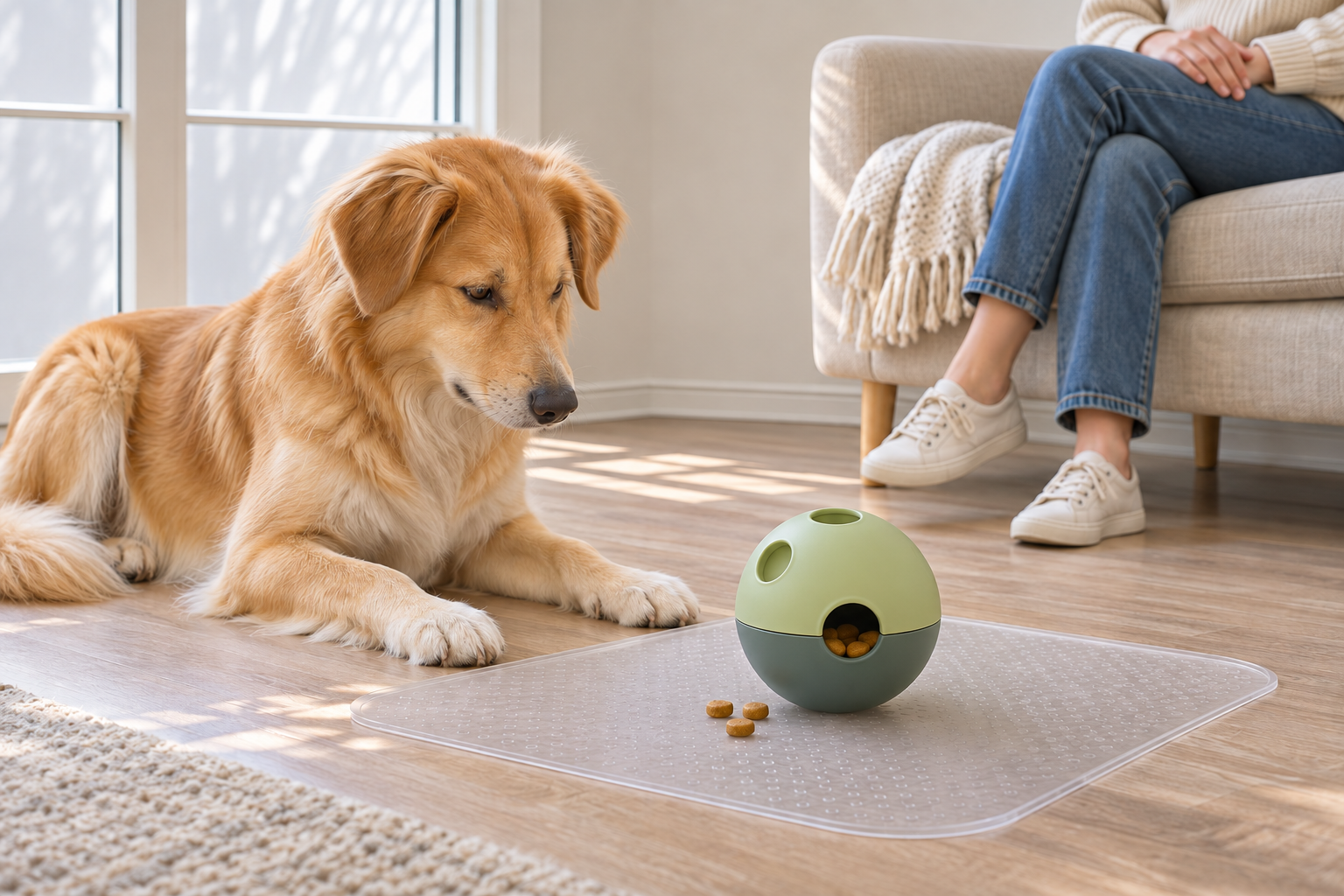
Review method: AI-assisted research-based product-category assessment using the original studies linked above. No hands-on testing, clinical review, brand ranking, or measured product performance is claimed. The featured image is an original AI-created illustration of a generic toy, not a named product, study device, or test photograph.
Prepared with AI assistance and source checks. General editorial information; no veterinarian-review claim. Report a correction.