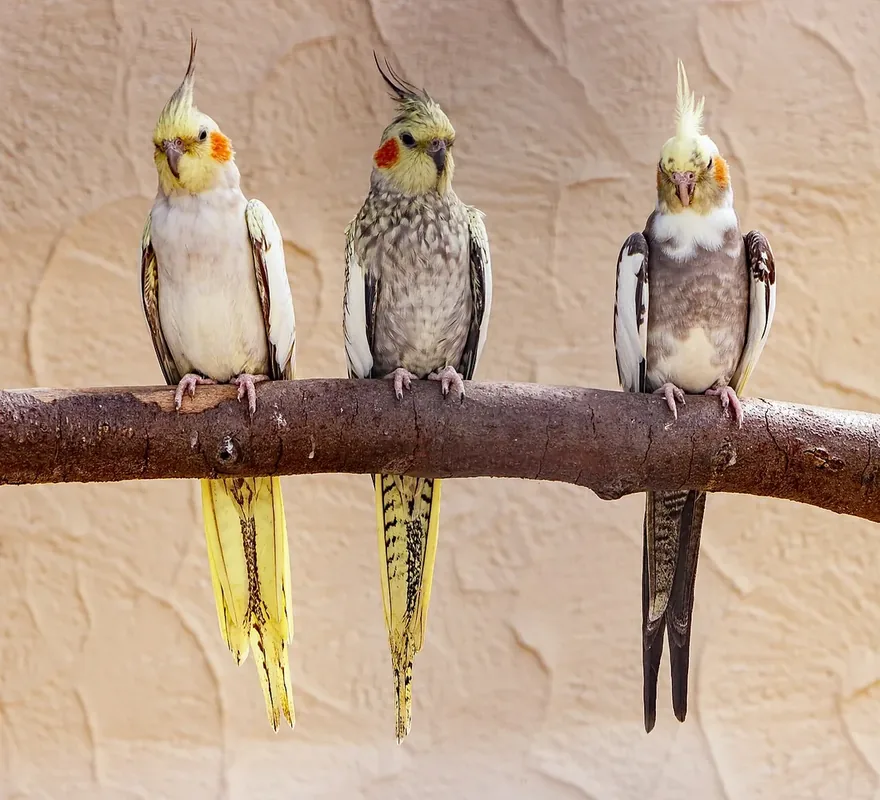
A cockatiel’s whistle, call, or sudden silence can feel like a message addressed directly to you. Before attaching a meaning to every sound, keep a brief diary of what happens around it. Context makes a more useful starting point than an online list of translated bird phrases.
Record the surroundings
Merck’s introduction to companion birds notes that noise and household compatibility deserve consideration before ownership. A sound diary offers a practical way to understand the bird you already live with. It is an observation tool, not a diagnostic system or a guarantee that every vocalization has one meaning.
For each notable sound, write the time, where the bird was, who was present, and what happened immediately before and after. Add visible behavior: moving toward a perch, eating, looking toward a door, or withdrawing. Avoid shorthand such as “angry scream” when what you actually observed was a loud call after someone left.
Compare ordinary moments
Choose a few daily situations to observe without deliberately provoking them. These might include the first household movement in the morning, routine cleaning, and quiet evening company. You do not need to record continuously. Short notes collected consistently are easier to interpret than hours of unlabelled audio.
If you make an audio or video clip, label it with date and context. Keep recording equipment outside the bird’s reach. A phone balanced on the cage is an unnecessary chewing or falling hazard. Ask family members before recording in shared areas.
Separate pattern from assumption
After a week, look for repeated circumstances. A bird might call when it can hear someone in the next room, or become quiet during a particular household activity. That relationship is worth recording, but it does not establish the reason by itself.
Discuss persistent changes or concerns with an avian veterinarian or a qualified bird-behavior professional. Do not punish calls, startle the bird, or assume prolonged vocalization can be solved by ignoring every situation. The bird’s environment, care, social needs, and health all deserve attention.
Make a household response plan
Agree on predictable ways to provide appropriate company, enrichment, and quiet. Put the successful routine in writing so different people do not respond with a confusing mix of excitement, shouting, or repeated cage moves. Respect the bird’s choice to leave an interaction.
Keep one separate page for changes that require a veterinary conversation: new sounds, noticeably altered voice, reduced appetite, or an unusual appearance. A change involving breathing difficulty needs urgent professional help, not another week of data collection.
Keep the diary small
Once you know the normal pattern, stop logging every whistle. Preserve a few representative entries and use the notebook when something changes. The goal is an attentive relationship with your bird. A useful diary helps you describe what you notice clearly while leaving room to enjoy the ordinary sounds of living together.
Editorial note: Prepared with AI assistance by Pet Living Magazine using the sources below. This article has not been reviewed by a veterinarian; individual care questions belong with your veterinary team.
Prepared with AI assistance and source checks. General editorial information; no veterinarian-review claim. Report a correction.