Foraging does not need to begin with a complicated puzzle. For a companion bird unfamiliar with searching for food, the first useful step may be noticing an easily accessible piece of appropriate food in a slightly different presentation. Keep the invitation gentle and the bird’s normal feeding needs protected.
Decide what is suitable first
Merck includes foraging opportunities among recommended components of pet-bird housing and enrichment. The specific foods, materials, and challenge level must still fit your species and individual bird. Ask an avian veterinarian about dietary needs and safe materials before improvising with household packaging.
Use food that belongs in the bird’s established feeding plan. Record any treats or extras rather than assuming a tiny item has no nutritional significance. Keep usual food and water available; an introductory activity should not force a bird to solve a puzzle in order to obtain essential nutrition.
Make the first search obvious
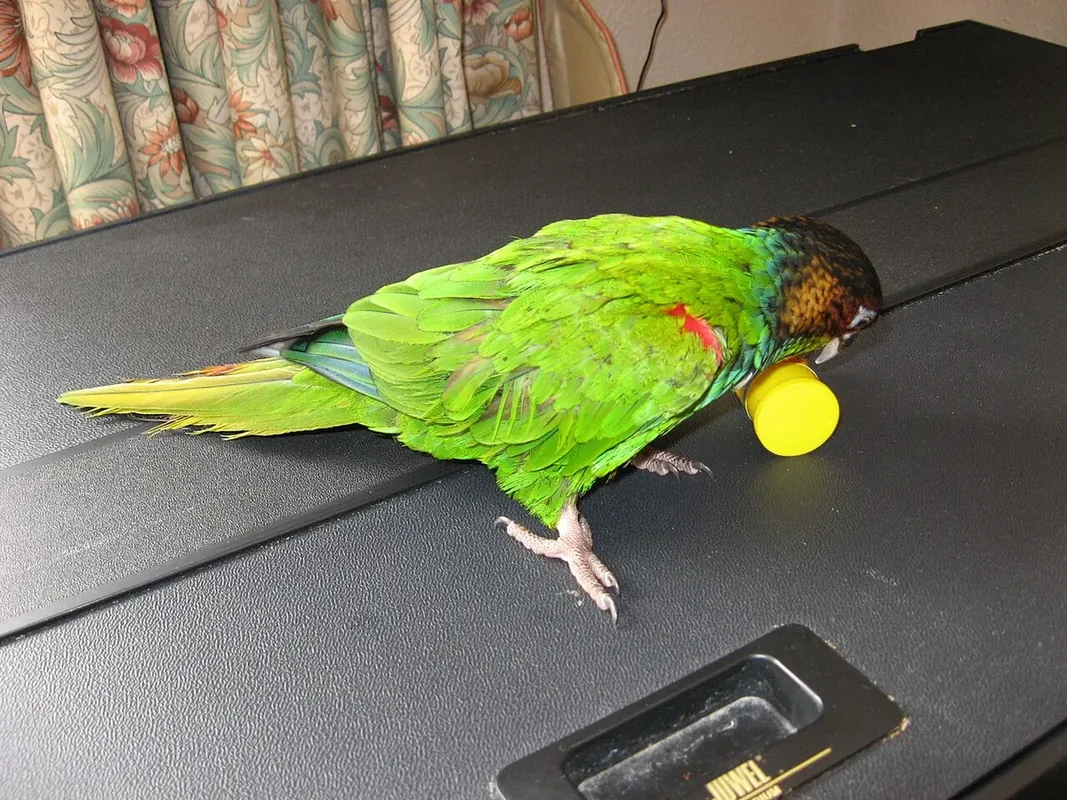
Start with a familiar, bird-safe feeding surface and a small amount of appropriate food that is visible and reachable. Stay nearby and observe. The goal is voluntary investigation, not a long period of effort. If the bird avoids the object, return to the familiar setup and reconsider location or materials.
Once the bird comfortably investigates, change one small element. You might vary the position on an approved surface rather than immediately covering everything. Avoid string loops, staples, adhesive, sharp edges, or pieces the bird could swallow. Supervise use and remove damaged objects promptly.
Preserve choice and successful access
A timid bird and an enthusiastic shredder need different introductions. Do not assume that one bird’s eagerness makes an activity safe for another. In a shared enclosure, observe who actually reaches the food. Provide separate opportunities when one bird repeatedly displaces another.
Stop if the bird appears distressed or the object proves unsafe. A new item that is not used does not need to stay indefinitely in hopes that hunger will change the outcome. Simplifying the activity is a reasonable adjustment.
Keep a short activity card
Write down the food used, the approved material, the level of supervision, and what happened. A useful card says, “Food visible on familiar surface; approached independently; removed after session.” It gives another caregiver enough detail to repeat the experience safely.
Add cleaning instructions and a replacement rule. Materials that become wet, dirty, or damaged need attention; they should not accumulate merely because they started as enrichment.
Review the whole day
Foraging is one part of a bird’s environment alongside space, movement, social interaction, rest, and veterinary care. It cannot compensate for a crowded cage or an unsuitable diet. If appetite or activity changes, contact your avian veterinarian instead of making the game harder or easier to test the bird. Build complexity only when the bird is comfortable and the basic care routine remains dependable.
Editorial note: Prepared with AI assistance by Pet Living Magazine using the sources below. This article has not been reviewed by a veterinarian; individual care questions belong with your veterinary team.
Prepared with AI assistance and source checks. General editorial information; no veterinarian-review claim. Report a correction.