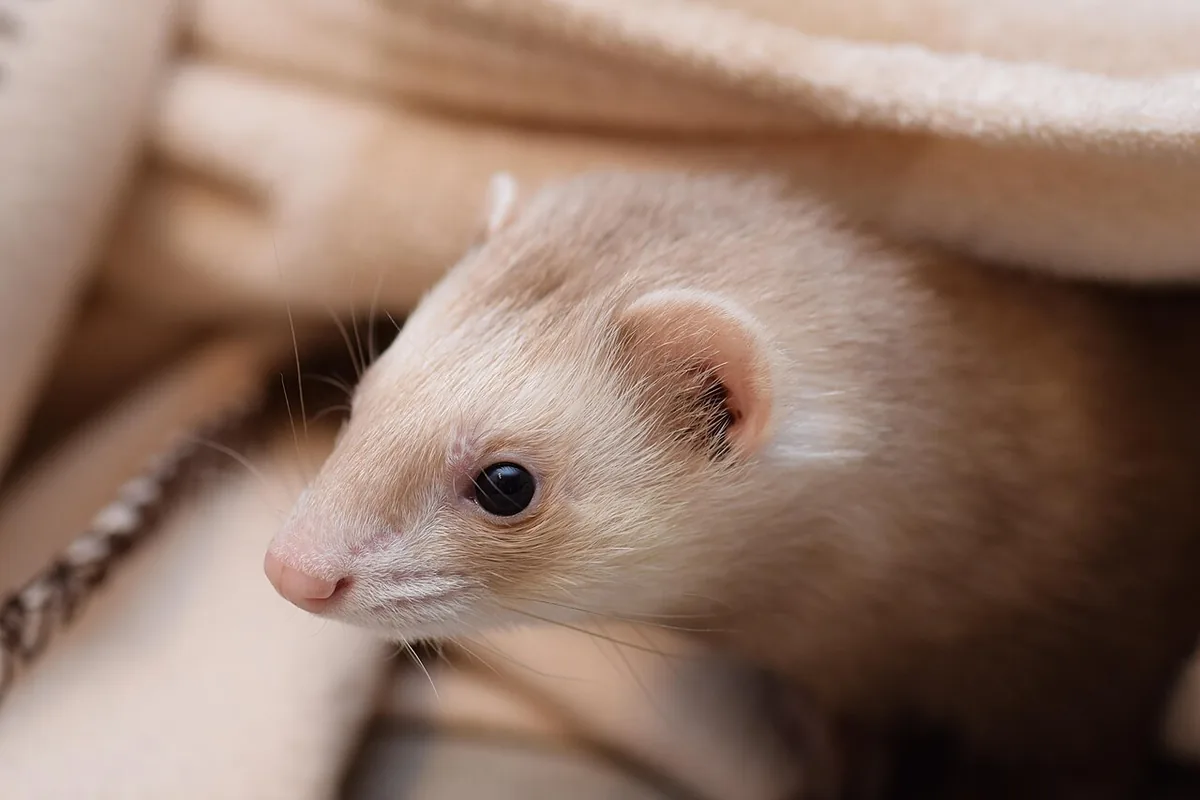
A ferret-ready room needs a closer inspection than a quick look around the furniture. Gaps under cabinets, appliance cavities, reclining chairs, and the underside of a sofa can create places where an exploring animal becomes trapped or difficult to find. Audit the room while the ferret is securely elsewhere, and repeat the check after furniture or household routines change.
Inspect at floor level
Look beneath and behind every item the ferret could reach. Check vents, cupboard bases, loose floorboards, door gaps, and holes where cables pass through a wall. Use secure, appropriate repairs rather than stuffing a gap with a movable object. Ask for installation advice if blocking access could affect ventilation or appliance safety.
The RSPCA’s ferret guidance emphasizes an environment that supports activity while keeping ferrets separate from prey species. A supervised exploration room should remain inaccessible to rabbits, rodents, and birds. Do not treat apparent friendliness through a barrier as a reason to share the space.
Lock down furniture movement
Make a clear rule for recliners, folding furniture, and sofa beds. They should not be operated while the ferret can reach their mechanisms. Before moving furniture, securely relocate the animal and confirm where it is. Checking that you can see the ferret is more reliable than assuming it is asleep somewhere else.
Keep laundry baskets, blankets, and bedding off routes where they may be gathered without inspection. A ferret can hide inside soft material. Household members need to know to check before loading a washer or carrying a pile of laundry. Close appliance doors and prevent access to the laundry area.
Secure portable hazards
Put medicines, cleaners, small objects, and unsuitable foods in closed, secure storage. Inspect waste bins and handbags as part of the room, not as temporary exceptions. A container placed on a chair may still be reachable. Give visitors somewhere secure to leave belongings before exploration time begins.
Check toy condition and suitability for the individual ferret. Remove items with loose pieces or material the animal can swallow. Follow supervision guidance and ask your veterinarian about uncertain objects. Do not leave the ferret unattended in a room simply because the first audit found no obvious problem.
Make return and counting routine
Know which secure home area the ferret will return to and how the caregiver will manage that transition. If you have several ferrets, count and identify each animal before closing the session. Mark the room check as complete only after everyone is accounted for.
Keep a record of near misses and newly discovered gaps so another caregiver can act on them. If the ferret may have swallowed an object, been injured, or become trapped in machinery, contact a veterinarian promptly. The audit is an ongoing household habit: useful precisely because an inquisitive animal and a changing room keep creating new questions.
Add a furniture-move rule
Put the ferret in appropriate secure housing before any reclining, folding, or furniture-moving task. Confirm the animal’s location with the responsible caregiver, then complete the task. Recheck gaps and mechanisms afterward before supervised exploration resumes. A sofa moved a few inches can expose a new opening even if the room was audited yesterday.
Ask every household adult to explain the rule and where the secure housing is. Include visiting relatives, cleaners, and anyone who gathers laundry. If a person cannot reliably follow the arrangement, keep the ferret out of that work area. Save a dated room photograph so you can see what changed, but do not treat the picture as a substitute for inspection. Keep the audit brief enough to repeat and precise enough to cover the hidden places. An inquisitive animal benefits from a predictable boundary, while the people benefit from a routine that prevents searching for the ferret during a hazardous mechanical task.
A quick household check
- Inspect the practical arrangement before the animal uses it or the activity begins.
- Show the responsible caregiver the sequence and confirm that they can carry it out.
- Keep the professional contact route available when the usual plan no longer covers a change.
Connect this task to the wider care plan
Turn the working arrangement into instructions another caregiver can follow with The Pet Sitter Handoff: What Someone Else Needs to Know.
Check the surrounding rooms for accessible products, medicines, and unsuitable objects with A Room-by-Room Pet Poison Prevention Walkthrough.
Prepare the information and contacts needed if an escape does occur with When a Pet Goes Missing: Organize the First Actions.
Editorial note: Prepared with AI assistance by Pet Living Magazine using the sources below. This article has not been reviewed by a veterinarian; individual care questions belong with your veterinary team. The photograph is representative editorial imagery, not a demonstration of every recommendation.
Prepared with AI assistance and source checks. General editorial information; no veterinarian-review claim. Report a correction.