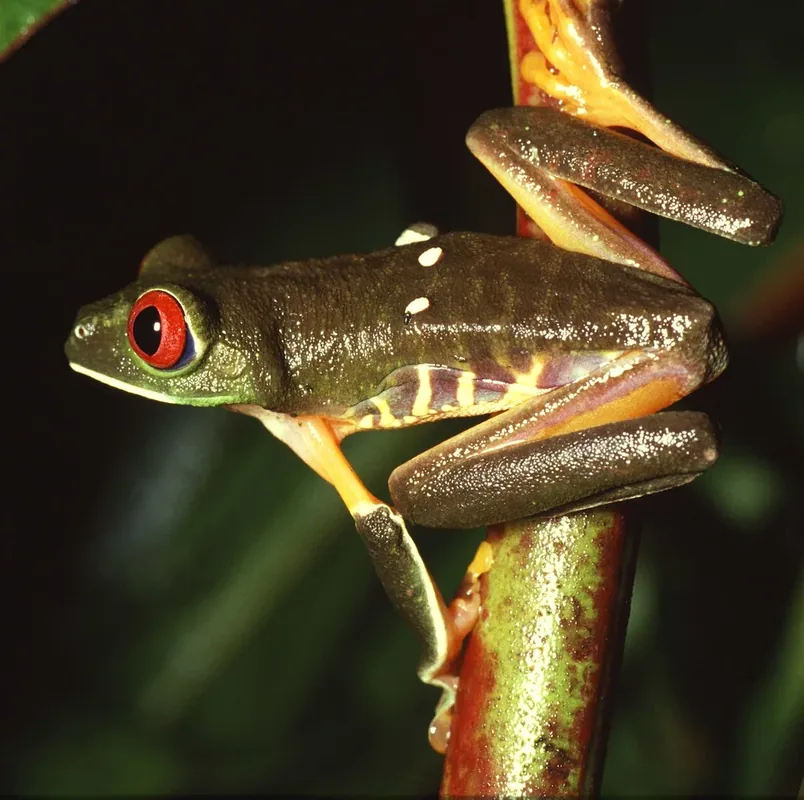
A foggy enclosure can look humid while still telling you little about the conditions at a frog’s preferred resting place. Use a humidity record that includes location, timing, ventilation, and water management. Start with the exact species, because frogs do not share one universal habitat recipe.
Establish the intended conditions
Merck’s amphibian-housing guidance recommends humidity measurement, appropriate ventilation, and species-specific professional advice. It also emphasizes water quality because amphibian skin can absorb contaminants. Ask an amphibian veterinarian for suitable humidity, temperature, water treatment, lighting, and substrate guidance for your animal.
Write those targets and methods in one place. Include the species name, habitat dimensions, measuring equipment, and the source of your care plan. “Tropical frog” is too broad an identification for precise husbandry decisions.
Choose repeatable observation points
Mark where the humidity sensor belongs and which resting locations matter. Record readings before and after routine misting if that is part of the approved setup, along with time and temperature. Keep the sensor position consistent so entries are comparable.
Condensation on glass is an observation, not a substitute for a calibrated reading. Likewise, a single reading after misting does not describe the full day. Look at the pattern through the normal maintenance and lighting cycle. Ask for knowledgeable help if your equipment’s instructions leave its placement or accuracy unclear.
Keep airflow in the picture
Do not close ventilation simply to make the number rise. Check that the enclosure remains securely ventilated and that decorations or covers have not blocked intended openings. A newly installed background or dense planting can change the layout enough to warrant another review.
Record normal room changes too: heating, an open interior door, or seasonal drying. Change one husbandry variable at a time with professional guidance so you can identify what altered the measured conditions.
Make water treatment explicit
Use the water preparation specified for your species and local supply. Merck notes that chloramines need appropriate treatment and advises against distilled water in amphibian enclosures. Save the exact product instructions and water-testing routine rather than relying on a caregiver to remember a generic dose.
Keep misting equipment clean according to appropriate guidance. Label it for the habitat and store it away from household cleaners. Never reuse a container that held an unsuitable substance simply because it has been rinsed.
Observe the animal separately
Record appetite, activity, and visible changes without unnecessary handling. Environmental numbers help describe care; they do not diagnose a frog’s health. A concerning change needs an amphibian-veterinary conversation even when the humidity display looks correct.
Bring the record and habitat photographs to that conversation. The strongest notebook distinguishes measured conditions, routine maintenance, and the animal’s observable behavior. It gives you a practical way to manage the habitat without treating moisture as a visual effect.
Editorial note: Prepared with AI assistance by Pet Living Magazine using the sources below. This article has not been reviewed by a veterinarian; individual care questions belong with your veterinary team.
Prepared with AI assistance and source checks. General editorial information; no veterinarian-review claim. Report a correction.