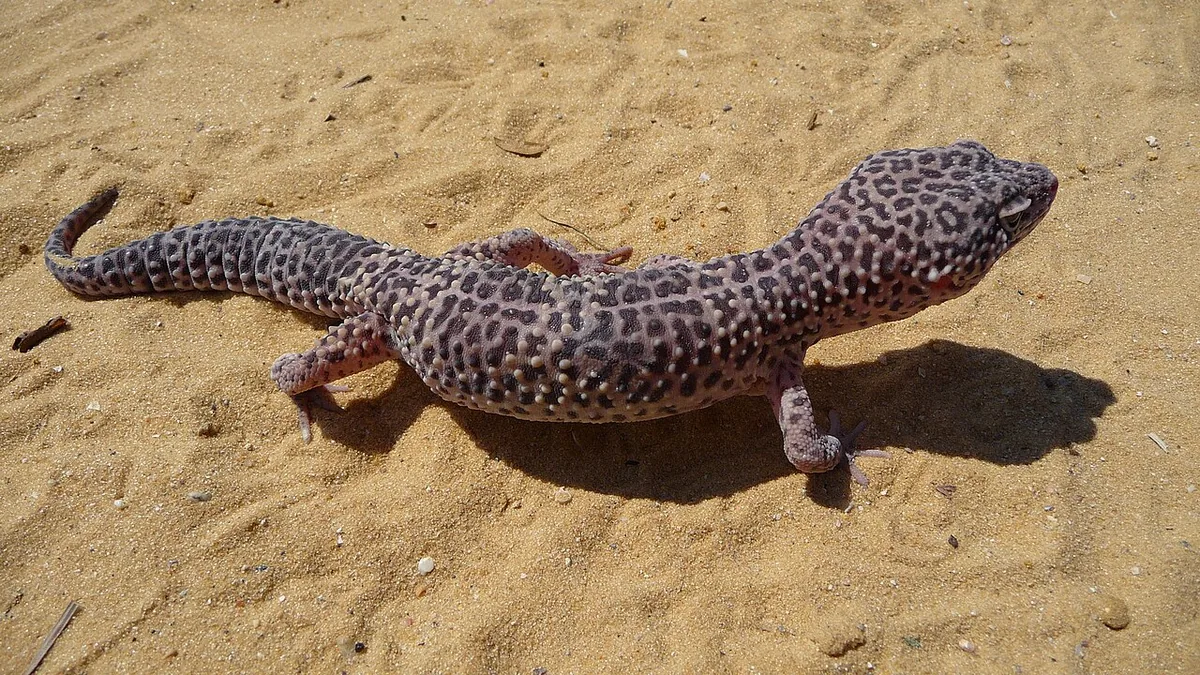
A leopard gecko’s hides should do more than decorate an enclosure. Their location affects which conditions the animal can choose while remaining concealed. Think of a hide layout as a set of accessible microclimates, and measure the conditions instead of judging them by appearance.
Put the species requirements on paper
The RSPCA’s leopard-gecko guidance recommends a temperature gradient, secure hides, and a localized humid hide within an otherwise appropriate environment. Read the full guidance and consult a reptile veterinarian about your individual animal, including age, health, and any special needs. A hide labeled for geckos does not establish the right conditions by itself.
Sketch the enclosure with the heating, lighting, water, and planned hiding positions. Mark which areas are intended to be warmer, cooler, or locally more humid. Keep species-appropriate ventilation and resource access part of the design; a humid hide is not a reason to make the whole enclosure damp.
Evaluate usable entrances
Choose a safe entrance and interior that accommodate the gecko comfortably. Inspect surfaces for sharp edges and spaces that might trap limbs. Make sure the hide is stable and cannot shift or fall as the animal moves. Keep it clear of direct contact with heating equipment.
A natural-looking object may still be difficult to inspect or clean. Consider whether you can check the gecko without unnecessary handling and whether a caregiver can maintain the hide according to the intended routine. Record any approved material used inside it so substitutions do not happen casually.
Measure the actual location
Check conditions at the places the animal uses, with suitable equipment and guidance on measurement technique. A temperature at the opposite wall does not describe the inside of a hide. Record the time and the enclosure’s heating and lighting state along with the reading.
Observe how conditions change after normal maintenance. Replacing humid-hide material, changing the water dish, or moving a decoration may alter the arrangement. Avoid repeatedly moving hides to chase the gecko’s last chosen position.
Introduce changes carefully
Preserve familiar access while adding or replacing a hide. Let the gecko investigate rather than placing it repeatedly inside. Keep a dated photo of the setup and note where the animal spends time. Position alone does not establish whether the animal is healthy or comfortable.
Use shedding as a reason to observe
The RSPCA warns that retained shed, especially around toes or eyes, needs attention and that attached skin should not be pulled off. Seek reptile-veterinary advice if shedding is incomplete or other concerns appear. Do not convert an environmental review into an improvised treatment.
Keep the habitat record with your veterinary information. A clear hide map, measured conditions, and observations of changes make a much better care conversation than “the tank seems warm enough.”
Editorial note: Prepared with AI assistance by Pet Living Magazine using the sources below. This article has not been reviewed by a veterinarian; individual care questions belong with your veterinary team.
Prepared with AI assistance and source checks. General editorial information; no veterinarian-review claim. Report a correction.