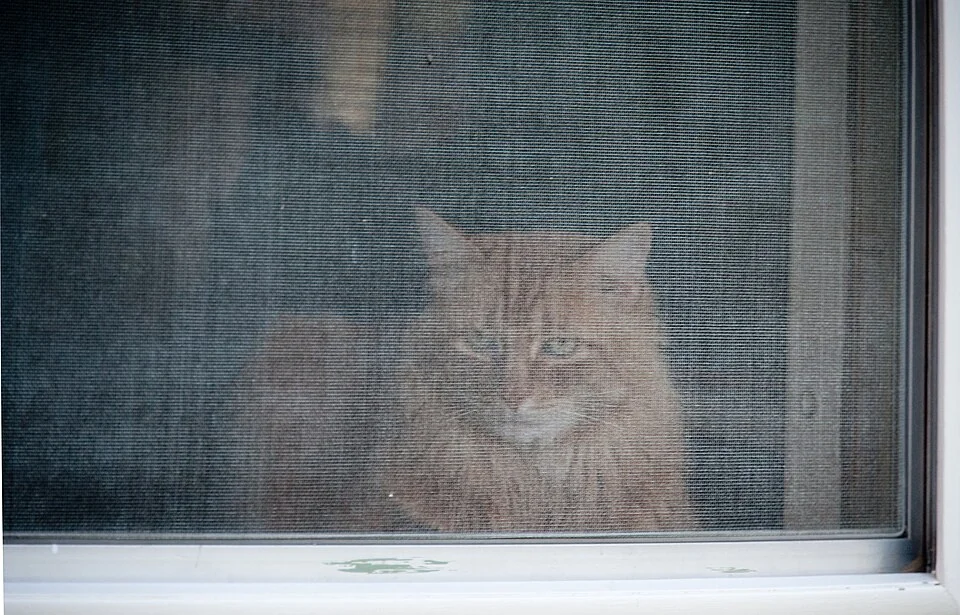
A good view can be a valuable part of a pet’s day, but an open window or balcony introduces a different task: reliable containment. In a cat household, assess the actual window, screen, furniture route, and exterior space before arranging the perfect perch. A screen intended to keep insects out should not automatically be treated as a pet barrier.
Inspect the complete opening
Check frame, locks, screen attachment, gaps, and the condition of surrounding materials. Consider what changes when the window is opened to its ordinary position. A loose screen can appear intact until pressure is applied; do not test it with the animal present. Ask a qualified installer about suitable secure containment for the exact opening. In a rental, obtain the necessary property approval before altering fixtures. Improvised netting or a propped board is not a substitute for a properly designed installation.
Consider how elevated options connect to rest, movement, and retreat in the whole room. This small-home cat-space guide supports a practical layout with attention to access and the animal’s individual choices. Start with Give a Small Home More Cat Space Without Adding Clutter.
Review the approach route
Move unstable furniture away from a risky opening and secure suitable climbing or resting furniture. The route to a window can change after a sofa or table is repositioned. Check it after decorating and when visitors move chairs. Keep blind cords and accessible hardware managed appropriately. A cat can explore higher surfaces than a dog, so standing at human eye level does not complete the inspection. Assess from the animal’s likely approach points while keeping it safely elsewhere.
Treat the balcony as an enclosure question
An exterior railing may leave gaps above, below, or between parts. A tall balcony still needs containment; height alone does not provide safety. Discuss a suitable enclosure with the property manager or qualified professional. Check ventilation, weather exposure, and the ability to bring the animal indoors promptly. Do not leave a pet unattended in an unsecured space. Keep plants and stored products appropriate and inaccessible, and inspect the enclosure after storms or building work.
Visitors can change doorway use, noise, and access to ordinary resources. The hosting guide helps you set protected spaces and adult responsibilities before the household becomes busier. Start with Hosting Guests When Your Pet Needs Space.
Make the household rule simple
Agree which openings may be used, which stay secured, and who checks them after cleaning. Tell visitors and sitters explicitly rather than assuming they will notice the pet. If an enclosure needs repair, keep access closed until the work is complete. ASPCA hot-weather guidance includes window-screen safety among household concerns. A pleasant view should be offered from a secure arrangement with a retreat option, suitable shade, and dependable indoor resources.
A practical example
A window perch is secure but the adjacent screen has loosened. Close access to the risky opening and arrange suitable repair. The perch and the containment fixture need separate checks.
Your preparation checklist
- Check locks, screen attachments, and gaps.
- Inspect furniture routes after room changes.
- Use qualified advice for an enclosure or installation.
- Keep unsecured exterior access closed.
- Tell every caregiver the same window and balcony rules.
Keep the route to professional help clear before a difficult situation develops. The emergency care guide brings contacts, transport, and records together so the household can move from concern to a practical response. See Your Pet Emergency Care Plan: Contacts, Transport, and Records.
Make the next decision clear
Offer the view from a secure indoor perch while any exterior containment questions remain unresolved. An enclosure should be suitable for the property and animal, with maintenance and supervision built into its use. If a fixture moves or a gap appears, close access and repair it. A beautiful perch is useful only when the entire route is safe.
Source context: The public primary material used for this article is linked here so readers can examine the original guidance, product information, or dated announcement: ASPCA: Hot-weather safety tips. Interpretations and practical planning examples are Pet Living Magazine’s editorial suggestions.
Editorial note: Prepared with AI assistance by Pet Living Magazine using the primary sources linked above. This source-prepared article has not been reviewed by a veterinarian; individual health, handling, and care questions belong with an appropriate qualified professional.
Prepared with AI assistance and source checks. General editorial information; no veterinarian-review claim. Report a correction.