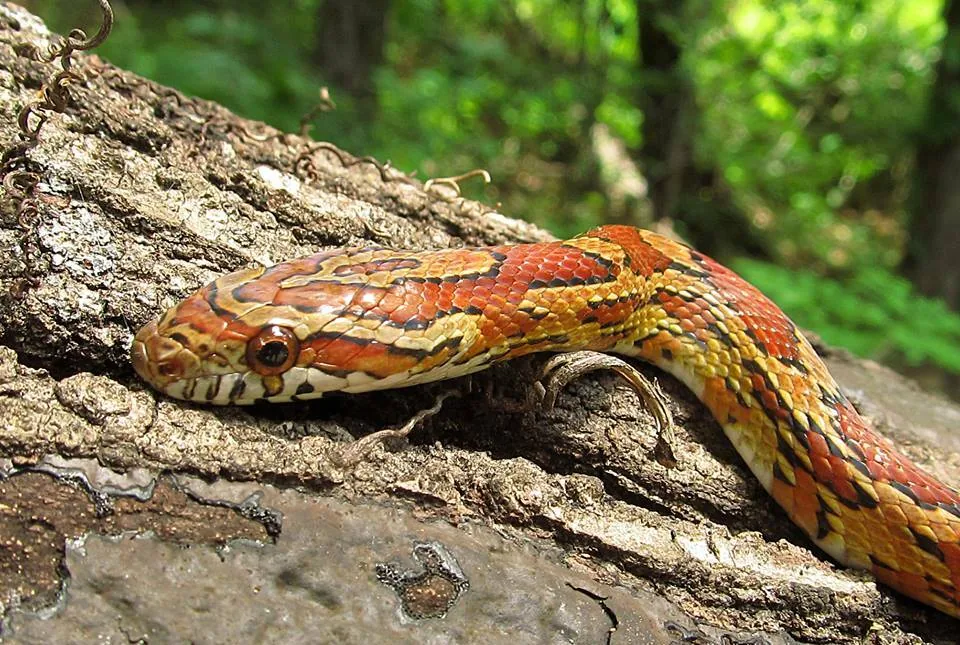
A corn snake’s shed can provide a useful date in its care history. Keep a journal that links the event to ordinary habitat measurements and observations, while resisting the temptation to handle or peel the snake simply to make the record complete.
Create a small event record
The RSPCA notes that shed frequency varies, with growing snakes generally shedding more often, and recommends avoiding handling around shedding. A journal should therefore describe your snake’s pattern rather than impose a deadline based on another animal.
For each event, record the date you noticed an appearance change, the date you found the shed, recent feeding dates, and the environmental readings already part of your care plan. Include any enclosure changes or equipment replacement. Keep facts separate from interpretations: “eyes looked cloudy” is more useful than “shed is late.”
Observe with minimal disturbance
Look from outside the enclosure during normal checks. Do not remove the snake from a hide to obtain a better photograph. Continue access to appropriate water and the species-specific environmental arrangement established with your reptile veterinarian.
If a humid hide is part of the plan, maintain it according to that guidance. Avoid guessing at a treatment by repeatedly spraying the entire enclosure or adding an untested product. The journal is intended to support good husbandry, not to substitute for a care assessment.
Photograph what is available
When you find the shed, photograph it in good light if useful. Note whether it appears complete without turning the inspection into a reason to manipulate the snake. Save the image with a date rather than keeping a large unlabelled collection of sheds.
Your veterinarian may want a clear description of what remains attached, where it is, and what else has changed. Contact the clinic for instructions if there is uncertainty. Do not attempt to remove retained eye caps or pull away attached skin. The RSPCA specifically directs keepers to reptile-veterinary help for retained eye caps.
Compare several events carefully
After a few entries, look for differences in your records. Has room temperature changed with the season? Was a heater replaced? Did an enclosure redesign remove a familiar hiding option? These questions help organize the conversation, but a correlation does not establish the cause of a problem.
A snake’s appetite, activity, body condition, or appearance can change for multiple reasons. Seek professional advice when something concerns you rather than waiting for the next shed to see whether it resolves.
Prepare the journal for a caregiver
Put routine checks and veterinary contact details on the first page. Explain which observations to record, which actions are normal maintenance, and which require a call. Include the species and the individual animal’s identification so records remain clear if you keep several snakes.
A useful shed journal is short enough to maintain and precise enough to share. It leaves the snake undisturbed while preserving the details that a future care decision may need.
Editorial note: Prepared with AI assistance by Pet Living Magazine using the sources below. This article has not been reviewed by a veterinarian; individual care questions belong with your veterinary team.
Prepared with AI assistance and source checks. General editorial information; no veterinarian-review claim. Report a correction.