An aquatic turtle’s basking area is a connected system: the platform, the route from the water, heating, lighting, measurement, and escape prevention all need to work together. A dry ledge under a lamp is only the beginning of the design.
Identify the turtle first
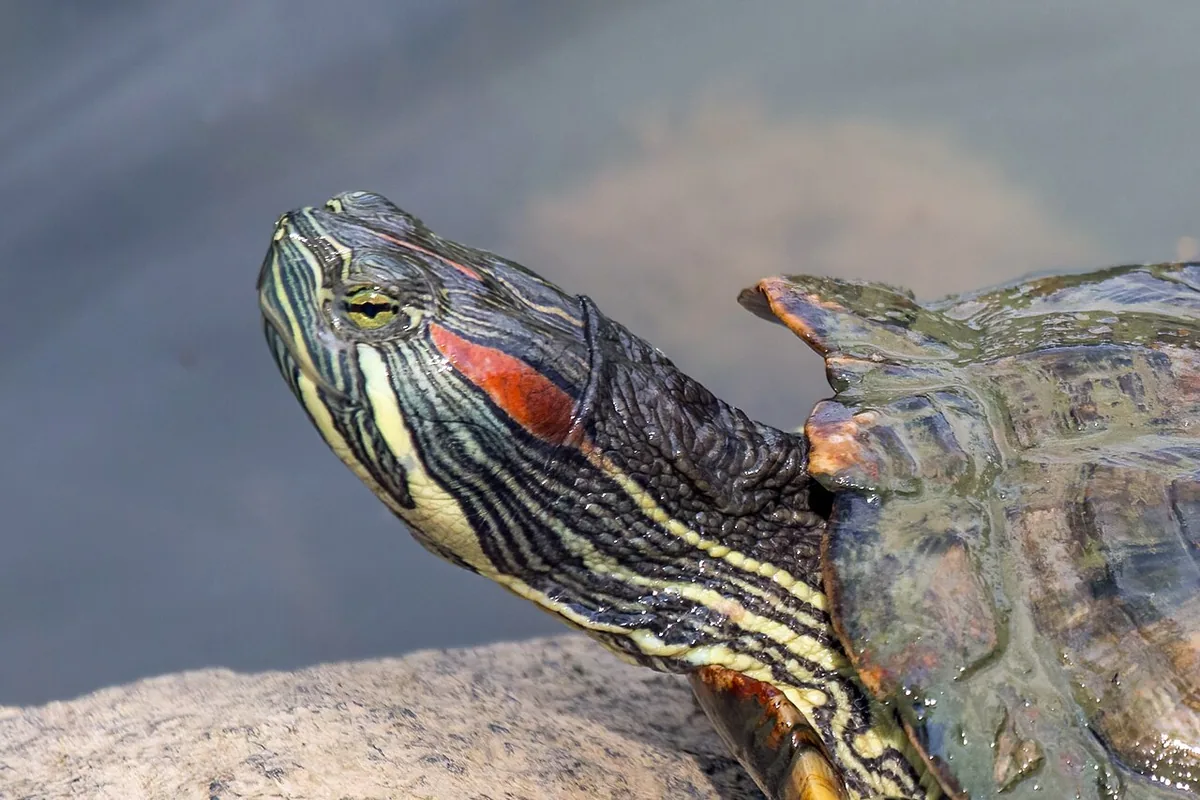
The RSPCA’s terrapin guidance discusses pond sliders, which need both swimming and dry basking opportunities. It describes a platform that supports the whole animal and an accessible ramp, with appropriate protected heating and lighting. Other turtles can have different needs. Confirm species identification and obtain a reptile veterinarian’s plan before applying slider-specific guidance.
Plan for the turtle’s expected adult size. A small platform that works for a juvenile may quickly become inadequate. Record shell size, enclosure dimensions, and planned capacity without assuming that a compact aquarium package will remain suitable throughout life.
Follow the route out of the water
Look at the approach from the turtle’s position. Is the ramp usable at the actual water level? Can the animal reach the dry surface without an awkward climb or getting caught? Does the platform stay secure when weight shifts? Avoid sharp surfaces, trapping gaps, and unstable supports.
Consider escape paths too. A basking platform raises the turtle closer to the enclosure edge. Check the complete boundary and any cover while preserving appropriate ventilation. Do not allow a climbing opportunity to become a route onto the floor.
Verify heat and light separately
Ask your reptile veterinarian for suitable heat and UVB requirements and follow the equipment instructions for positioning and replacement. Measure conditions at the usable basking location rather than recording only the room or water temperature. Save the thermostat probe position and lighting arrangement in a photograph.
A lamp’s brightness does not establish that it supplies the required UVB. Likewise, changing the platform height changes the distance to the lamp. Recheck the arrangement after equipment replacement or any substantial layout change.
Make maintenance part of access
Plan how the platform and ramp will be cleaned without damaging their supports. Review water quality and filtration as part of the full habitat, not as a separate decorative choice. Keep animal equipment separate from food-preparation equipment and practice appropriate hand hygiene; reptiles can carry Salmonella.
Take dated photographs after cleaning and reinstall the equipment in its intended positions. A caregiver should have exact instructions rather than being left to approximate the angle of the ramp.
Watch use without forcing it
Observe whether the turtle reaches and uses the area. Do not place it repeatedly under the lamp to demonstrate that the setup works. A change in use, appetite, movement, or appearance warrants veterinary advice.
Keep measured conditions and observations together. A functional basking zone offers appropriate choices and remains dependable as the turtle grows. Regular review is more useful than assuming the original aquarium arrangement will stay correct indefinitely.
Editorial note: Prepared with AI assistance by Pet Living Magazine using the sources below. This article has not been reviewed by a veterinarian; individual care questions belong with your veterinary team.
Prepared with AI assistance and source checks. General editorial information; no veterinarian-review claim. Report a correction.