Say your dog's name and a head turns toward you. That small moment can be a useful piece of communication in its own right. You can teach it without immediately asking the dog to sit, walk across the room, or hold a long stare. Start by making attention easy and worthwhile.
Think of the name as an invitation to notice you. Decide what you will reward before practicing: a brief, comfortable orientation toward you. Other cues can follow later, but the first lesson needs one clear answer. This is attention practice, not proof of a reliable recall or permission to remove a leash.
Prepare a quiet first attempt
Battersea's name-training guidance begins in a calm place with few distractions. It describes saying the dog's name from nearby, marking the moment the dog looks, and rewarding with food or play. It specifically advises against adding a sit or another behavior before delivering the reward for attention.
Pick a familiar room where the dog is relaxed and available to interact. Put a suitable reward within easy reach before you start. Use food appropriate to the dog's existing feeding plan or an activity the dog enjoys. The exercise should not depend on withholding necessary food or creating excitement that makes it difficult to notice the cue.
Use a marker the dog already understands, if you have one. The first marker-training session explains that separate foundation. Do not turn name practice into a simultaneous introduction to unfamiliar equipment, a new signal, and several other tasks.
Reward the response you intended
Say the chosen name, mark the comfortable turn of attention, and provide the reward promptly. Then give a pause before another attempt. You are offering a short learning opportunity, not asking for constant attention throughout the day. Keep the interaction brief enough that both of you remain relaxed.
For a practical rehearsal, imagine your dog glances toward you while still standing. If attention is today's task, that is the moment you meant to recognize. Waiting for a sit changes the lesson. Write “looks toward me” on your practice note if it helps you resist adding requirements halfway through.
Make household communication consistent. Agree which everyday name you will use during practice and what a successful response looks like. A nickname can be affectionate without becoming another training instruction that someone else expects the dog to understand immediately. Do not have several people calling from different directions to test the lesson.
Let an unanswered name change the setup
Battersea advises returning to an easier step when a dog does not respond and increasing distractions gradually. Its separate attention guidance explains that proximity to distractions affects a dog's ability to remain calm, accept food, and respond. Watch the animal and adjust the environment.
Do not turn one unanswered attempt into a string of louder repetitions. Pause, manage the situation, and consider whether you chose a difficult moment. A dog watching a visitor at the door is working in a different setting from a dog resting comfortably with you in a quiet room.
Keep a short observation rather than a verdict about character. “Looked toward the window when a delivery arrived” identifies something you can change next time. “Stubborn” does not tell the next caregiver how to make practice achievable. If the difficulty is persistent, ask a qualified reward-based trainer to assess the setup.
Change one thing on the next occasion
Once the easy version is comfortable and repeatable, add a modest challenge while keeping other elements familiar. For example, change where you stand within the same quiet room before asking for attention in a busier location. These are editorial planning examples, not a required progression or a promise about how quickly a dog will learn.
Record the setting and what happened in one sentence. A useful note might say, “In the quiet kitchen, turned toward me and accepted the reward; next practice stays here.” Another might say, “Movement outside the window made this harder; choose a quieter view.” You need enough information to pick the next manageable task, not a scorecard for every glance.
Keep the safety arrangement in place
A head turn and a return to your side are different outcomes. Build movement toward you through an appropriate recall-training plan, and retain secure containment and suitable leash management. Do not use traffic, wildlife, or another animal as an experiment in whether name recognition is dependable.
If hearing, discomfort, or a new behavior change may be involved, bring that concern to your veterinarian instead of assuming the dog needs firmer training. An individual dog may need an adapted communication method. The aim is a useful, kind exchange that suits the animal in front of you.
End with an easy, comfortable interaction rather than repeatedly testing the limit. Over time, a name can become a clear way to begin communication. Today, one understandable invitation and a well-timed reward are a worthwhile place to start.
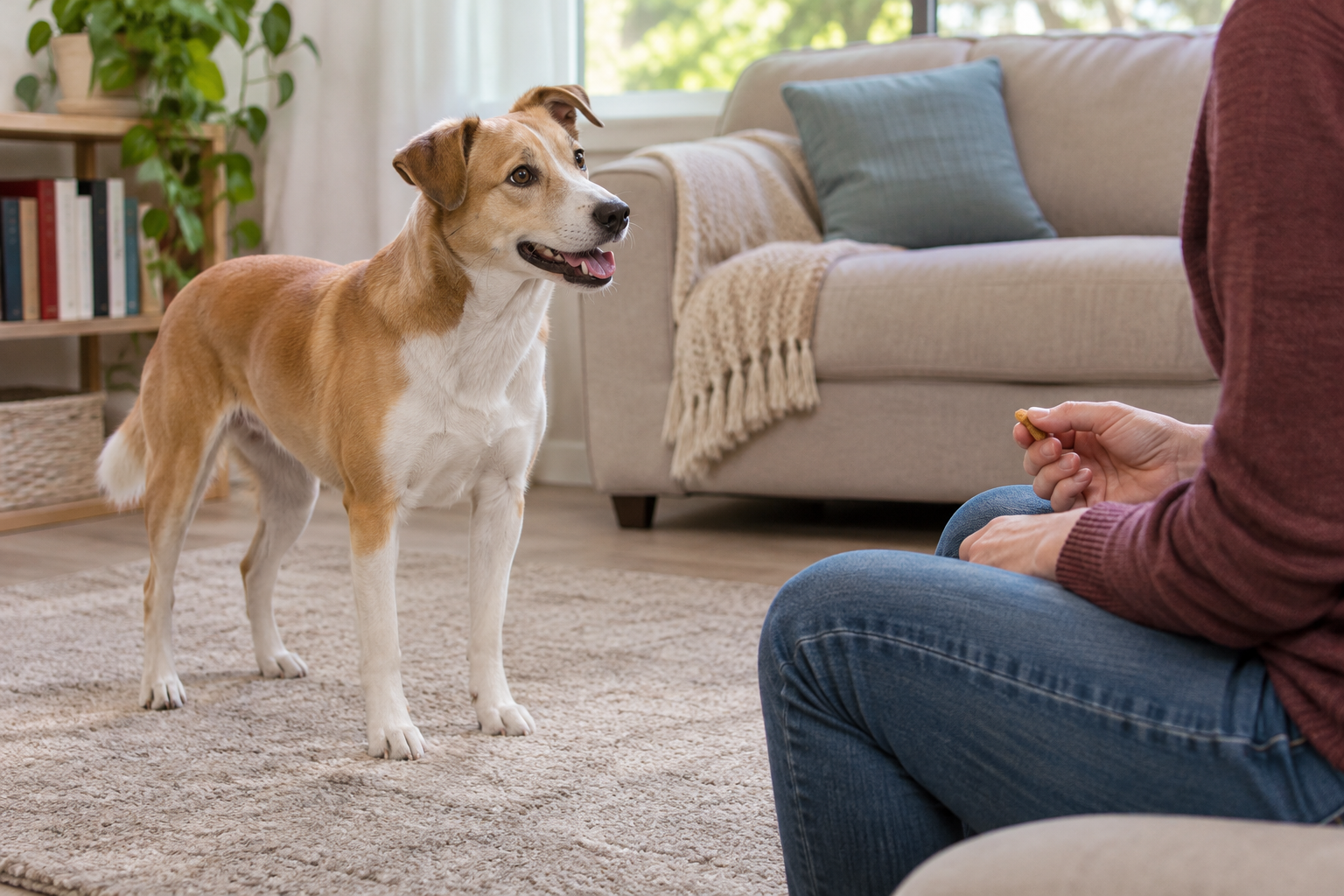
Editorial note: Prepared with AI assistance using Battersea's primary training guidance. Practical rehearsal examples are editorial suggestions; no hands-on testing or individual behavioral assessment is claimed. This article has not been reviewed by a veterinarian. The featured image is an original AI-created illustration, not documentary training evidence.
Prepared with AI assistance and source checks. General editorial information; no veterinarian-review claim. Report a correction.