A rabbit's coat needs attention, but a grooming session should not become a struggle to finish every patch at once. Start with the individual coat, a suitable tool, and a rabbit who can participate comfortably. Routine brushing and a bath are very different decisions.
This guide concerns ordinary coat care and recognizing when to ask for help. It does not teach clipping, mat removal, treatment of soiled skin, or bathing a rabbit with a medical problem. Ask a rabbit-experienced veterinary team to demonstrate the appropriate handling and care for your animal.
Match the plan to the coat beneath the surface
RSPCA Australia's grooming guidance distinguishes short- and long-haired coats. It describes a soft-bristled brush for everyday short-coat care and warns that a long coat can look tidy on top while remaining matted underneath. Long-haired rabbits require daily coat maintenance; moulting can increase the work.
Ask someone qualified to show you what a properly maintained coat feels like on your rabbit, which tool suits each area, and how to inspect without pulling. Bring the brush you own. A product sold for pets generally is not automatically suitable for this coat or for every part of the body.
Make the time commitment realistic. If the rabbit needs daily professional-guided maintenance, a quick brush over the back once a week is a different routine. Arrange help early if illness, travel, or the amount of grooming makes the current plan unworkable.
Prepare the place before bringing the brush
PDSA's rabbit-care guidance recommends interacting at the rabbits' level and avoiding unnecessary lifting. It warns against holding a rabbit on their back or lifting by the ears or scruff. Its day-to-day advice includes regular brushing and checking for illness, injury, and a dirty bottom.
Use a secure, comfortable setting with dependable footing and good light. The rabbit floor-grip guide can help you review the surrounding route. Avoid a slippery raised surface chosen simply because it is convenient for your hands. Let the veterinary team demonstrate safe positioning when an area cannot be checked with the rabbit standing normally.
Place supplies where you can reach them without abandoning the rabbit in an unsuitable position. Keep scissors and clippers out of an ordinary brushing session. You are preparing to remove loose coat with an appropriate method, not improvising a haircut when the brush encounters resistance.
Build participation in small steps
RSPCA Australia recommends positive-reinforcement training and short initial sessions to help rabbits accept grooming. Begin with a manageable interaction, using a suitable reward within the rabbit's feeding plan. Ask your veterinary team or an appropriately experienced professional how to adapt that process to a rabbit who fears handling.
One illustrative starting goal might be a calm approach to the prepared area, followed later by acceptance of brief brush contact on an easy part of the coat. It is not necessary to claim the whole grooming task is complete after that rehearsal. Essential coat care still needs an appropriate plan while comfort with handling develops.
Do not chase, pin, or exhaust the rabbit to complete a cosmetic goal. If the rabbit repeatedly struggles or the task cannot be performed safely, stop and obtain help. A change in tolerance can also be worth discussing with the veterinary team rather than treating it as a contest about cooperation.
Let a snag be a stopping point
Rabbit skin is delicate, and RSPCA Australia warns that scissors and clippers can cause injuries during mat removal. Leave tight or uncertain mats for a rabbit-experienced veterinary team to assess. Do not pull hard to “work through” a knot or place blades against skin hidden beneath fur.
Describe the location and the change you noticed when asking for help. Is this a new patch? Has the rabbit stopped tolerating touch there? Is the coat damp or contaminated? Those observations help explain why ordinary brushing is no longer sufficient without assigning a diagnosis.
A dirty coat is not an invitation to a routine bath
The Rabbit Welfare Association & Fund advises against routine bathing. It describes serious stress and injury risks and explains that persistent soiling can reflect an underlying problem requiring veterinary assessment. Any medically necessary washing should follow the veterinarian's specific instructions.
Contact the clinic promptly about a dirty bottom, skin problems, or reduced self-care, rather than repeatedly washing away the evidence. Fly eggs or maggots require urgent veterinary attention; do not try to resolve them with a bath. Grooming cannot substitute for an examination when a rabbit is unwell.
Make the ongoing work visible
Keep the agreed tool, frequency, difficult areas, and professional contact in a short care note. Share it with everyone responsible for the rabbit. For a new household, the adult-rabbit preparation guide places that continuing care alongside housing and access to a suitable veterinary practice.
Review the routine during moults and whenever coat condition or mobility changes. A useful brushing session leaves the rabbit comfortable and the caregiver clear about what was completed and what needs help. The amount of hair on the brush is not the only measure of success.
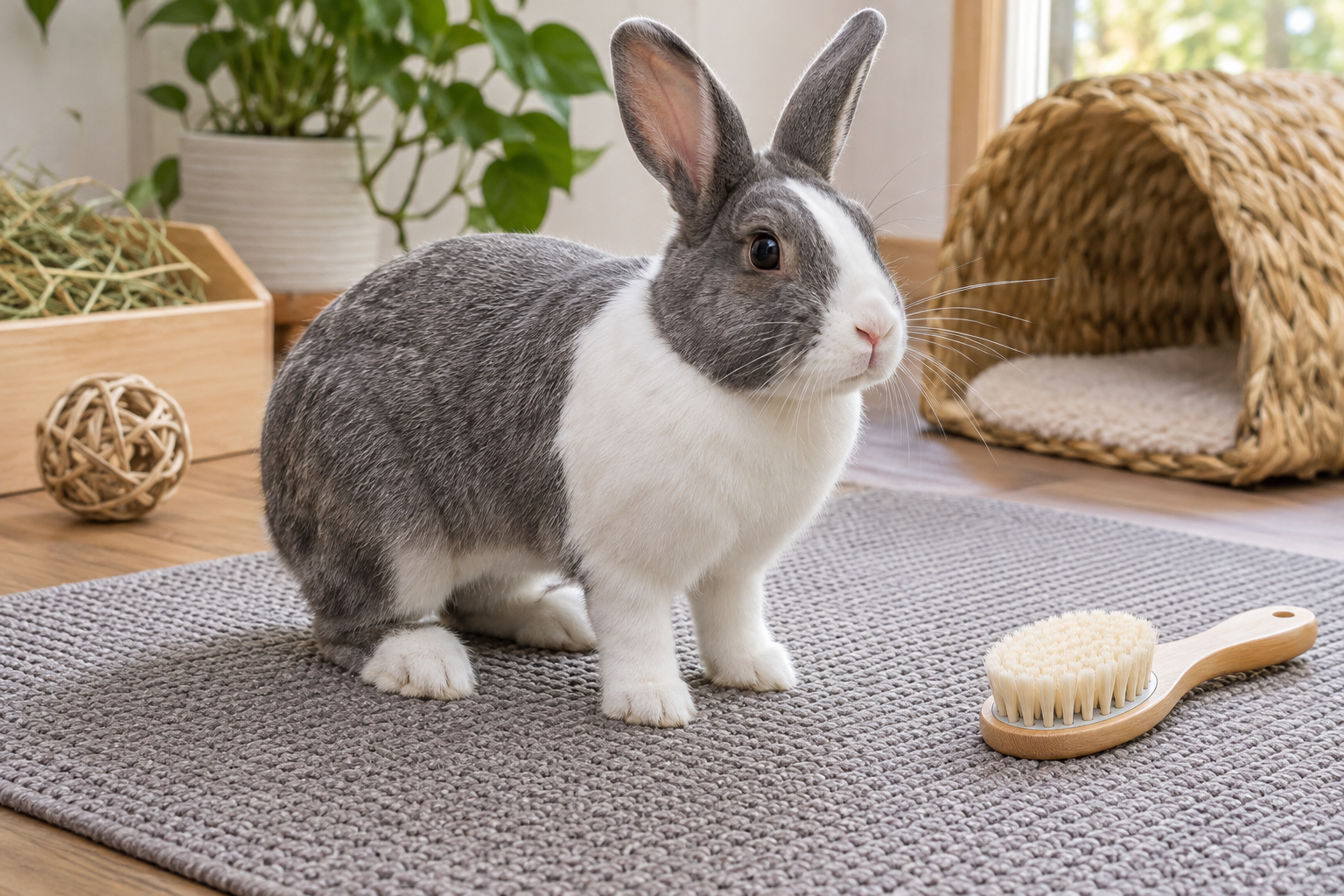
Editorial note: Prepared with AI assistance using the primary welfare and veterinary guidance linked above. Practical participation examples are editorial suggestions. This article has not been reviewed by a veterinarian. The featured image is an original AI-created preparation scene and does not demonstrate handling or a complete habitat.
Prepared with AI assistance and source checks. General editorial information; no veterinarian-review claim. Report a correction.