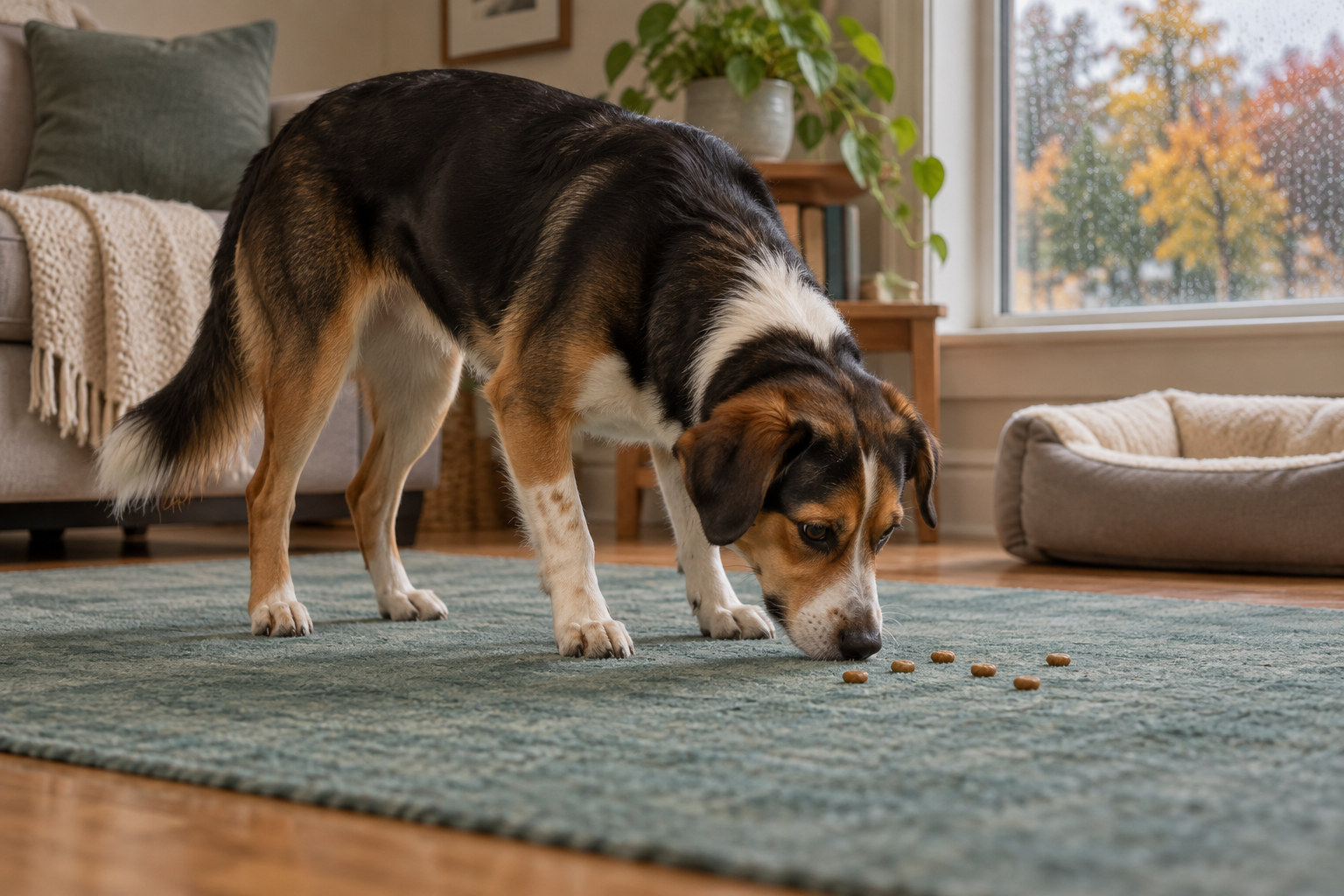
A wet afternoon can make the living room feel unusually small. Before buying another puzzle, try giving one familiar corner a new purpose: a simple, supervised search for a few pieces of your dog's usual food. Start with a task the dog can understand, then let their response guide what happens next.
Start with the dog in front of you
Dogs Trust's enrichment guidance recommends matching activities to an individual dog's health, abilities, preferences and dietary needs. It also emphasizes supervision and making tasks easier when a dog seems confused or frustrated. For a first indoor search, that means choosing simplicity over an impressive setup.
This is an optional activity, not a prescribed exercise program or a way to treat behavior problems. If food games do not fit your dog's veterinary feeding plan, or your dog guards food, ask your veterinary or qualified behavior team for an appropriate alternative.
Make a small search station
Choose a clear, easily supervised patch of floor. For this first version, leave out boxes, cups, folded towels and other objects: there is no need to introduce a second task before you know whether your dog enjoys the first. Keep other animals in comfortable separate spaces so the activity does not become a competition.
Place a few pieces of suitable food in plain sight while your dog watches. Give the dog room to approach, investigate or decline. You are arranging an invitation, not setting an obedience test. If you use a word such as “find,” keep it quiet and consistent; repeated urgent instructions can make a relaxed moment feel like a performance.
Change one detail, then take notes
If that first search works comfortably, make the next round only slightly different—for example, spread the pieces a little farther apart within the same clear area. Avoid changing the room, surface and difficulty all at once. A smaller change makes your observations more useful.
Try this short household record after the session:
- Setup: Which room and clear floor area did you use?
- Invitation: Did the dog approach, watch from a distance or choose something else?
- Next version: Keep the same arrangement, make it easier or choose another activity?
- Cleanup: Have you accounted for the food and cleared the area?
The record need not become a score. “Watched, then went back to bed” is useful information. It tells the next caregiver what happened without labeling the dog stubborn or assuming the game needs to become harder. In a shared household, add the note to your dog-care handoff so another person can repeat the familiar version.
Keep the food and the finish simple
Dogs Trust advises accounting for food used in enrichment within the dog's daily allowance. Put the activity on the same household record as meals and treats; don't let several caregivers each add an unrecorded handful. Our guide to building a useful diet history explains how to make that broader feeding picture visible.
After cleanup, let the ordinary day resume. The RSPCA's guidance on a good home for dogs stresses access to a comfortable, quiet resting place. Leave that choice available instead of turning every indoor moment into another activity.
A successful afternoon does not require a longer search tomorrow. Keep the version that fits your home, record what you actually notice, and make room for your dog to choose rest.
Editorial note: This household activity plan is an original Pet Living Magazine synthesis of the sources linked above, checked October 23, 2026. It has not been individually assessed for your dog. The featured image is an AI-created illustration, not a photograph of a reported event.
Prepared with AI assistance and source checks. General editorial information; no veterinarian-review claim. Report a correction.