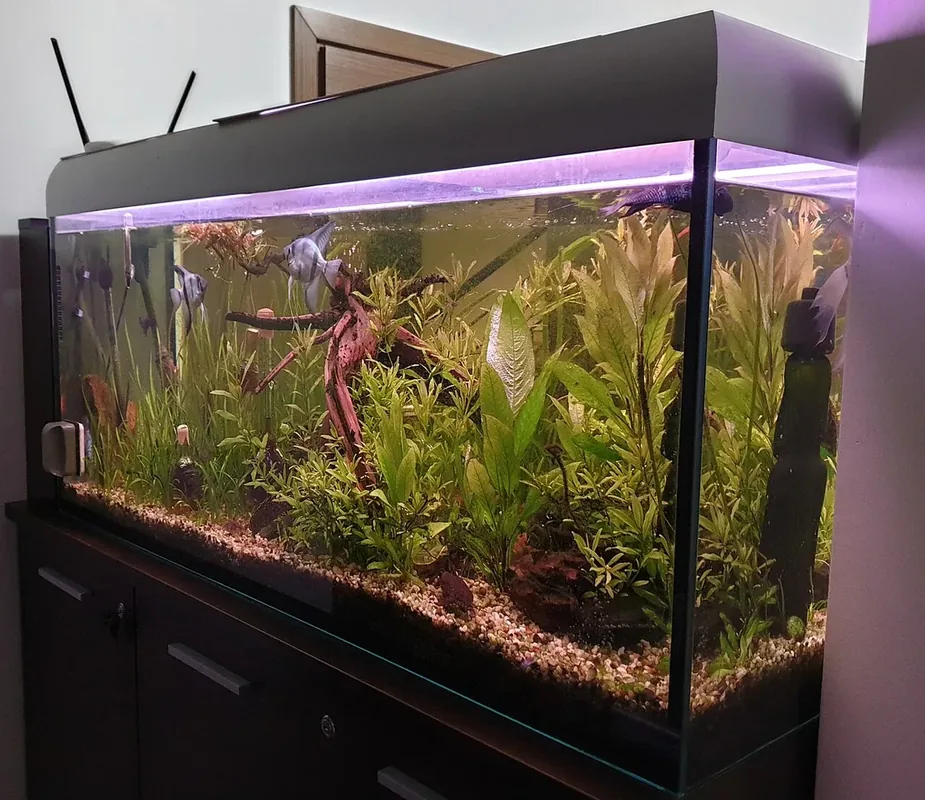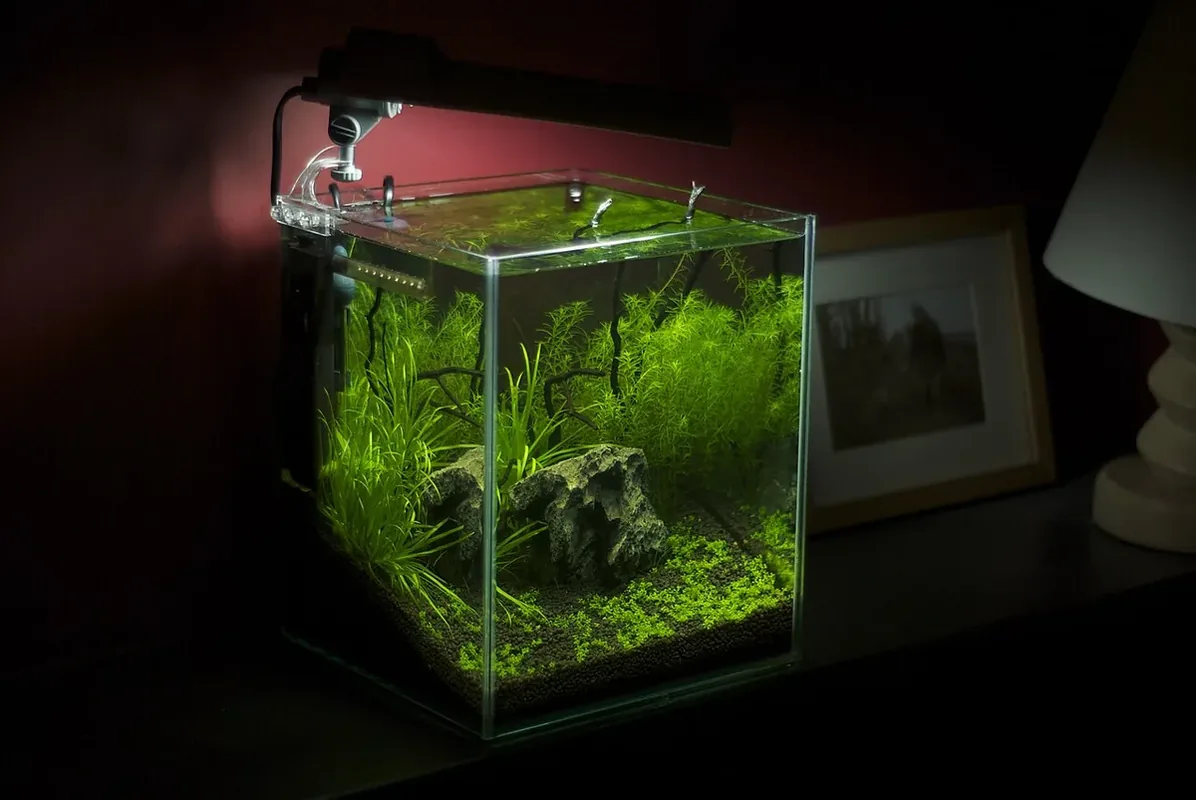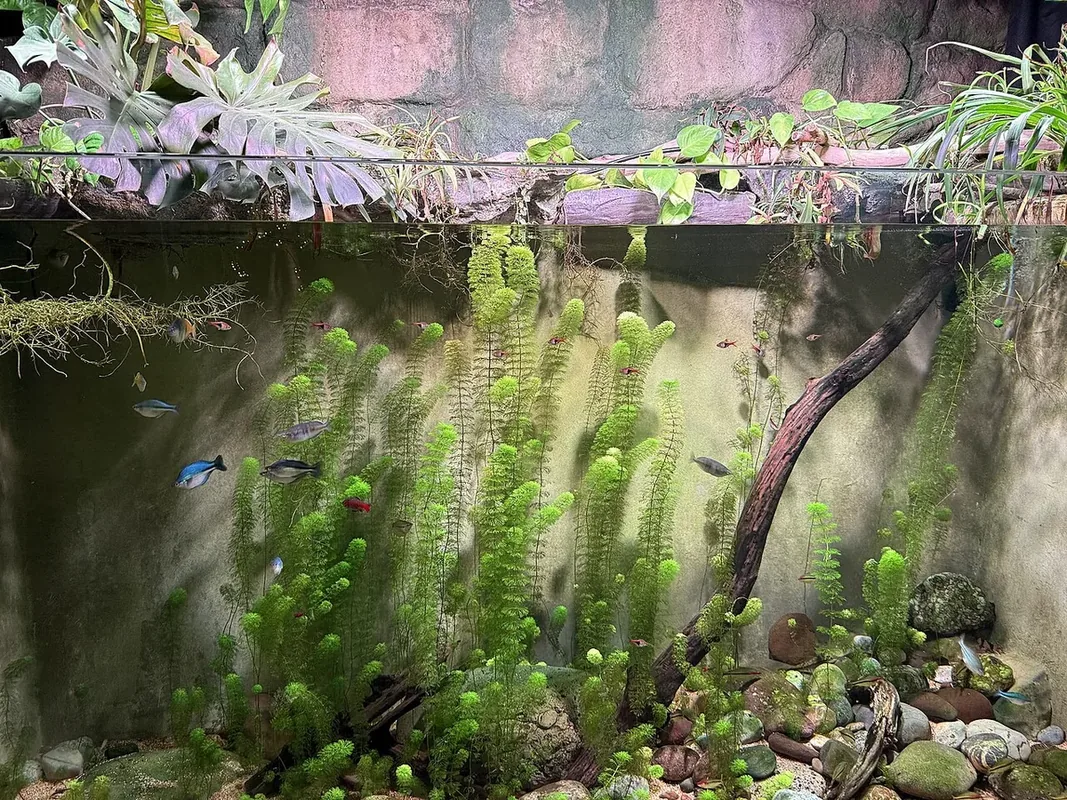
A planted aquarium without injected carbon dioxide can still have depth, texture, and a clear visual idea. Its success begins with choosing plants and equipment that fit the maintenance you can repeat. Design the aquarium around practical access as well as the finished photograph.
Define what low-tech means here
For this plan, low-tech means a freshwater planted aquarium without a CO2-injection system. It does not mean no filtration, no testing, or no maintenance. Plant producer Tropica presents a non-CO2 layout using its easier plant selection and restrained lighting as one example; that specific display is inspiration, not a universal recipe.
Write down your available weekly care time, tank dimensions, light, substrate, and intended fish. Ask a knowledgeable aquatics professional about plants suited to that combination. Keep the needs of the animals central; planting does not make an uncycled or overcrowded tank suitable.
Make a short plant list
Choose a small set of identified plants with compatible requirements. Record each plant’s expected size, planting method, and likely trimming needs. Ask how it should be attached or planted; not every plant is installed in the same way.
Give each selection a job in the layout: a background shape, a modest midground grouping, or a focal attachment to suitable hardscape. Avoid adding numerous unfamiliar species at once just to fill an empty-looking tank. Leave room for growth and maintenance.
Preserve the service routes
Sketch where you will reach the glass, siphon waste, access the filter, and inspect the heater. A piece of wood that creates a striking composition may also block equipment or conceal a trapped fish. Secure aquarium-safe hardscape appropriately and eliminate sharp or trapping points.
Keep suitable swimming and surface access for your planned inhabitants. Follow species-specific guidance instead of assuming a densely planted tank suits every fish. Merck’s owner guidance stresses that the aquarium’s conditions need to match the animals it holds.
Keep lighting and feeding records
Use the light’s verified instructions and appropriate advice for the plant selection. Record the schedule rather than repeatedly changing it in response to a single disappointing day. If you use aquarium fertilizer, confirm suitability for the inhabitants and follow the exact product directions.
Track plant additions, trimming, water changes, and relevant water tests. Take a photograph from the same position periodically. Pictures help reveal changes in growth and access without turning every minor leaf change into a new equipment purchase.
Judge maintenance before expanding
After the routine is established, review whether you can reach everything and remove waste comfortably. Change a troublesome planting position before adding more plants. An attractive aquarium that you can service safely has a stronger foundation than one that requires rearranging the whole scape each week.
If fish show concerning changes, seek appropriate advice and check water measurements. Plants contribute to the environment, but they do not replace care. A thoughtful low-tech layout is a manageable living arrangement whose beauty can grow alongside your experience.
Editorial note: Prepared with AI assistance by Pet Living Magazine using the sources below. This article has not been reviewed by a veterinarian; individual care questions belong with your veterinary team.
Prepared with AI assistance and source checks. General editorial information; no veterinarian-review claim. Report a correction.