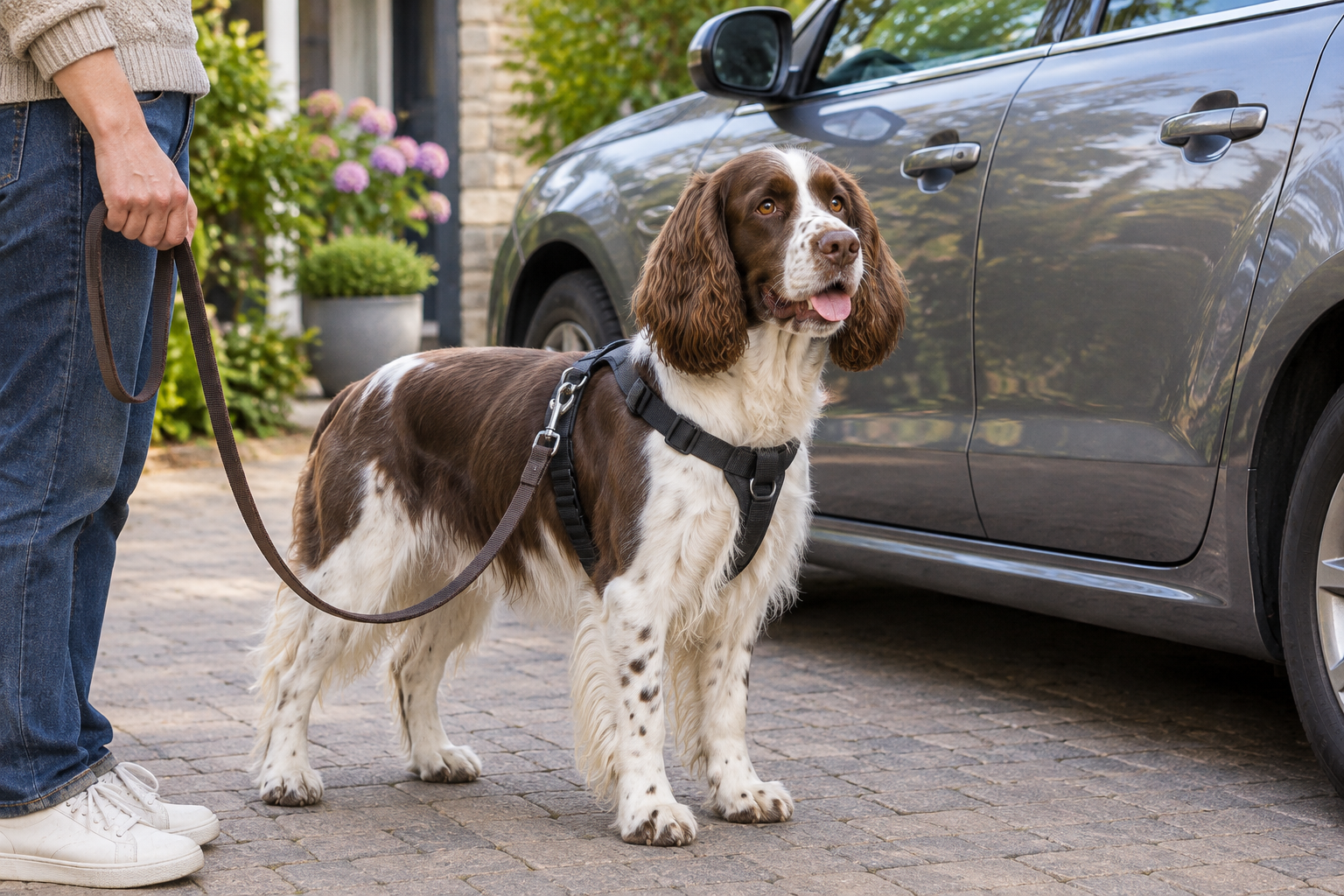
A dog who drools, becomes uneasy, or vomits during car journeys needs more than another item on the packing list. Before planning a longer trip, talk with the veterinarian about the pattern and what might make travel more comfortable. Repeating unpleasant drives is not a substitute for a care plan.
This guide helps prepare that conversation. It does not prescribe medication, recommend a fasting period, or provide an individual travel-training program. If your dog is unwell now, seek veterinary advice rather than treating every episode of vomiting as a familiar travel problem.
Describe more than vomiting
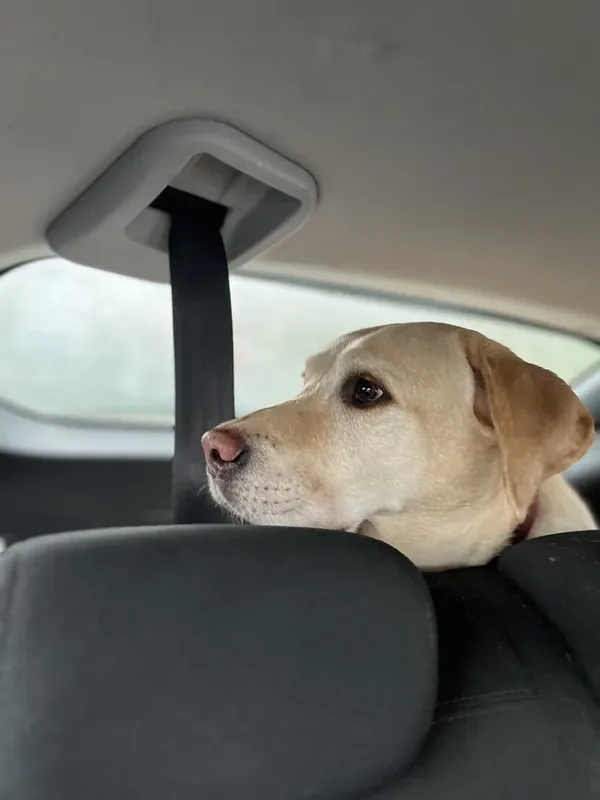
The Merck Veterinary Manual's motion-sickness guidance describes nausea, excessive drooling, vomiting, and other possible signs of uneasiness. It explains that motion sickness involves stimulation of the inner-ear sensory system and that fear of a vehicle may contribute. Signs can sometimes occur even before the vehicle moves.
That helps explain why “it happened in a parked car” does not settle whether nausea, a learned association, or another problem needs attention. Do not divide the issue into “real sickness” versus “only behavior” and assume you have identified the cause. Tell the veterinary team exactly when the signs begin.
Prepare one clear account of an actual journey: before getting in, after loading, with the engine running, once moving, and after stopping. Do not repeat the trip to fill a missing observation. An honest “I did not notice” is better than a guess presented as a fact.
Make the next trip part of the discussion
Tell the clinic why travel is needed, roughly how long it will take, and whether the timing can change. A necessary appointment tomorrow and an optional holiday next month create different practical questions. Ask about the safest arrangement for the immediate journey as well as the longer-term plan.
Use the road-trip planning guide for route and equipment logistics. This article's separate question is how to address recurring nausea or distress before those logistics are put into use. An organized itinerary does not establish that the dog is ready for a long drive.
If you travel alone, explain how you will manage loading and stops without monitoring the dog while driving. Arrange any observations through a passenger when possible. The driver should concentrate on the road and stop safely when attention to the animal is necessary.
Ask about both illness and the travel association
PDSA's veterinary guidance explains that dogs experiencing car sickness can also become afraid of journeys. It recommends seeking veterinary help when a problem appears and describes gradual, positive travel training alongside appropriate treatment where needed.
Ask whether an individualized familiarization plan is suitable now, where it should begin, and what signs mean the task is too difficult. A first step need not be a drive. Do not borrow a fixed progression from another dog's success story or insist on finishing a session while your dog becomes distressed.
Keep the distinction between a supervised learning opportunity and necessary transport clear. If a veterinary visit cannot wait for practice to progress, ask the clinic how to handle that journey. Postponing important care until the dog enjoys the car is not a workable solution.
Get precise instructions if medication is recommended
Merck notes that veterinarians can provide medication for motion sickness when appropriate. Your veterinarian needs the dog's health history, current medicines, and the details of the planned journey to make an individual decision. A medicine that helped another animal does not become your dog's prescription.
Ask for the exact product and directions in writing, including timing, administration, what to do if the dog vomits after receiving it, and whom to contact about an unexpected response. Those are questions for the prescriber, not amounts to calculate from this article. Clarify feeding and drinking instructions for your particular dog rather than imposing an internet fasting timetable.
PDSA cautions that human and nonprescription travel medicines may be ineffective and have side effects. Discuss supplements and home remedies before using them too. Do not combine products because each is described as calming or natural.
Measure whether the plan suits ordinary care
Before an elective longer journey, ask the team how it wants the plan evaluated. Keep the actual instructions, dates, and observable response together. Record what happened without declaring that one quiet ride proves the issue has permanently disappeared.
A hypothetical example illustrates the handover: one adult knows when signs used to begin, another has the written veterinary instructions, and both know whom to call if the journey goes badly. Combine that information in one accessible place rather than leaving it in separate memories. The travel-folder guide can help organize the records.
Decide with the team whether to continue, shorten, postpone, or arrange different care for an optional trip. The goal is a manageable journey for this dog, not completing an itinerary at any cost. A useful plan addresses comfort and learning while preserving safe transport and prompt access to veterinary care.
Editorial note: Prepared with AI assistance using the primary veterinary sources linked above, checked November 9, 2026. No veterinarian reviewed this article or prescribed a treatment through it. The handover example is hypothetical. The featured image is an original AI-created preparation scene, not a documented patient or vehicle-restraint demonstration.
Prepared with AI assistance and source checks. General editorial information; no veterinarian-review claim. Report a correction.