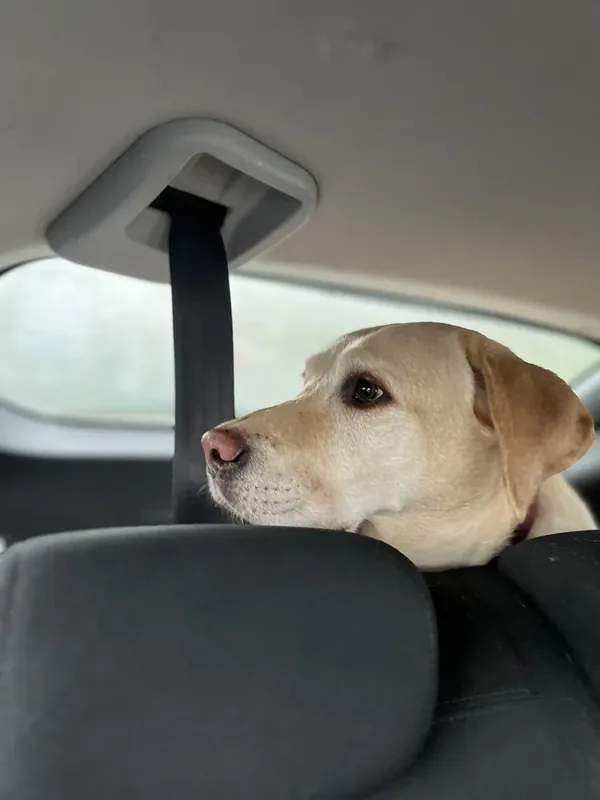
A dog road trip becomes easier when the animal’s needs help shape the route. Start before booking hotels: decide whether your dog can travel comfortably, how it will be secured, and where the household can provide ordinary care along the way. A scenic itinerary is useful only if it works for every traveler.
Begin with the dog’s present routine
Think about the dog’s experience in a vehicle, comfortable activity level, medical needs, and response to unfamiliar places. Discuss the trip with your veterinarian, particularly if motion sickness, anxiety, or a continuing condition is involved. Do not give a human travel medication or borrow another animal’s prescription.
The AVMA’s travel guidance emphasizes planning with your veterinary team. Ask which records, supplies, or follow-up arrangements your particular dog needs. If travel would compromise the care plan, a dependable sitter or boarding arrangement may be the better holiday choice.
Rehearse the transport system
Choose a suitable restraint or carrier and follow its installation instructions. Check the fit on the actual dog and in the actual vehicle. Practice loading and unloading in a secure place before departure. A device that fits on a kitchen floor may be awkward with your car’s seat arrangement or a second traveler’s luggage.
Take short practice drives and observe the dog without asking the driver to look away from the road. Record what made the experience difficult: motion, equipment, noise, or the length of time. Give yourself enough lead time to revise the plan. An unfamiliar restraint introduced on a long journey adds an avoidable challenge.
Design stops around care
Choose safe places where the dog can leave the vehicle on secure equipment, access water, and have appropriate bathroom opportunities. Review the expected conditions and adjust the schedule for weather and the animal’s needs. Do not plan to solve a timing problem by leaving the dog alone in a parked vehicle.
Assign a handoff routine. One person secures the leash before a door opens; another handles bags or other passengers. Keep that sequence consistent at every stop. Busy service areas have traffic, unfamiliar animals, and sudden distractions, so the ordinary home doorway routine deserves extra attention.
Pack by task
Keep drinking supplies, cleanup bags, identification, and secure walking equipment accessible rather than under every suitcase. Store the prescribed medications according to their labels and bring enough for the trip plus the contingency advised by your veterinary team. Use the animal’s familiar food and avoid making several diet changes during travel.
Separate the quick-stop bag from the overnight bag. The first contains what you need beside the vehicle; the second includes bedding, records, and routine supplies. Label both so another traveler can find an item without unloading the entire car. Keep a paper contact sheet in case phone access fails.
Confirm lodging in detail
Ask the actual property about animal limits, fees, restricted areas, and whether the dog may ever remain in the room without you. Confirm rules for your dates and room type. A search filter labeled pet friendly does not answer all those questions. Save the confirmation with the reservation.
Plan meals and activities that do not require an improvised abandonment of the dog. If a venue cannot accommodate the animal, arrange appropriate care in advance or choose another activity. A road trip works better when the people’s entertainment and the dog’s care are compatible from the beginning.
Check the destination’s outdoor rules
For hiking, inspect the current rules of the specific park and trail. The National Park Service notes that many trails do not permit pets. A park entrance that welcomes a dog does not guarantee access to the whole destination. Build an itinerary with permitted options and a backup for closures or unsuitable weather.
Choose the route based on the dog’s comfortable abilities. A dramatic summit is not a requirement for a worthwhile day. Familiar pacing, water, rest, and the ability to turn back should be part of the plan before the walk begins.
Prepare the unexpected route
Identify veterinary care near the overnight stops and destination, and verify opening or emergency procedures directly. Agree which traveler can make decisions if the dog becomes unwell. Keep medical records reachable. The backup should cover an interrupted trip as well as a successful one.
Before leaving, do a final review of the animal, equipment, weather, and reservations. The strongest road trip plan is adjustable. It leaves enough margin to stop, shorten a day, or head home when the dog’s needs change. That flexibility is what turns preparation into a more enjoyable journey.
Give another traveler the complete plan
Share the animal’s care sequence with the other adults before departure. Ask one of them to find the medication, records, and next overnight contact using the packed bags. This small rehearsal reveals confusing labels and missing information while they are still easy to fix. If you are the only traveler, tell a trusted person the route and where your care instructions can be found if you need help.
Prepared with AI assistance and source checks. General editorial information; no veterinarian-review claim. Report a correction.