A carrier that appears only when the family is rushing out the door has a difficult introduction to make. Before the next routine appointment, give your companion bird a chance to encounter it during an ordinary, unhurried day. The useful goal is familiarity: seeing the carrier, approaching it and eventually entering without every encounter ending in a journey.
This is preparation for a bird who is well enough to practice, not a reason to postpone necessary veterinary care. If an appointment is urgent or your bird seems unwell, call your avian veterinary team for transport instructions. Tell them what handling the bird currently accepts. Do not wait for a training milestone before seeking help.
Begin with equipment questions, not a deadline
Bring your veterinarian a description or photograph of the actual carrier before relying on it. Ask whether its size, ventilation, fastening and interior arrangement suit your bird. Mention mobility limitations, previous escapes or chewing. An attractive carrier in an illustration is not a product recommendation, and a label describing an item as suitable for birds cannot answer every individual question.
Find a permanent storage place that another caregiver can identify. Keep the carrier and its approved fittings together, rather than discovering on appointment morning that a necessary part is in a different cupboard. Check the manufacturer's cleaning and assembly instructions, and inspect the carrier before use. Preparation is easier when the equipment is ready before the animal is asked to participate.
Give a new object some distance
The RSPCA's bird-training guidance describes a gradual introduction: initially let the bird see the carrier in the room at a distance, then reward calm approaches over short sessions. Watch for nervousness and stop rather than pushing closer. Its later stages separate entering with the door open, briefly closing it and learning to tolerate gentle movement. Those are different tasks, not one challenge to finish at once.
Decide which task you are offering before you begin. “Notice the carrier from the familiar perch” is a more precise plan than “get used to travel.” Keep the rest of the arrangement recognizable. Adding a new carrier, a new room and an unfamiliar person together makes it harder to tell which change matters.
For any practice outside the cage, prepare the room first. Our flight-room safety review covers boundaries and household precautions. Rehearsal should happen where an open carrier does not become an accidental route outdoors. Stay present; leaving a bird with unfamiliar equipment is not the same exercise as a supervised introduction.
Reward participation without making it a contest
World Parrot Trust recommends positive reinforcement: reward behavior you want to encourage and avoid frightening or physically punishing a parrot. It advises seeking qualified help for persistent behavior difficulties. A carrier session should not become a battle of wills or an occasion to punish refusal.
Use a reward your bird already values and that fits their established care plan. If food is involved, ask the veterinary team how to include it appropriately. Do not change feeding or withhold ordinary food to force the outcome. The practical question is whether the bird can take part comfortably, not whether you can obtain one impressive photograph of the bird inside.
Leave enough time after practice to return to the normal household routine. Starting when you are already late adds a human deadline the bird cannot understand. If you cannot remain calm and attentive, save the optional session for a better opportunity.
Write the next caregiver a usable starting point
Keep a short record beside the carrier. Separate what happened from what you hope happens next. For example, “stayed on the usual perch while the carrier sat across the room” records an observation. “Ready for a car trip” makes a larger claim that observation cannot establish. Note the setup, the reward offered and the point where you stopped.
Add the current practice stage to your bird-sitter handoff. State which interactions the bird accepts with which person. A substitute caregiver should not discover the limits by trying to repeat a task you have not demonstrated together. Keep your veterinary contact and the separate urgent-transport plan with those instructions.
Keep familiarity separate from travel readiness
A bird entering an open carrier at home has achieved something useful, but that alone does not settle how to secure the carrier in a vehicle or manage a particular journey. Ask your avian team about those conditions before an appointment. The RSPCA also recommends refreshing carrier practice after the initial introduction rather than assuming the skill remains comfortable indefinitely.
The carrier can become an ordinary, recognizable part of care while the actual travel plan remains specific to the bird and the trip. Keep those two jobs distinct. That leaves you with clearer observations at home and better questions for the professionals helping you prepare.
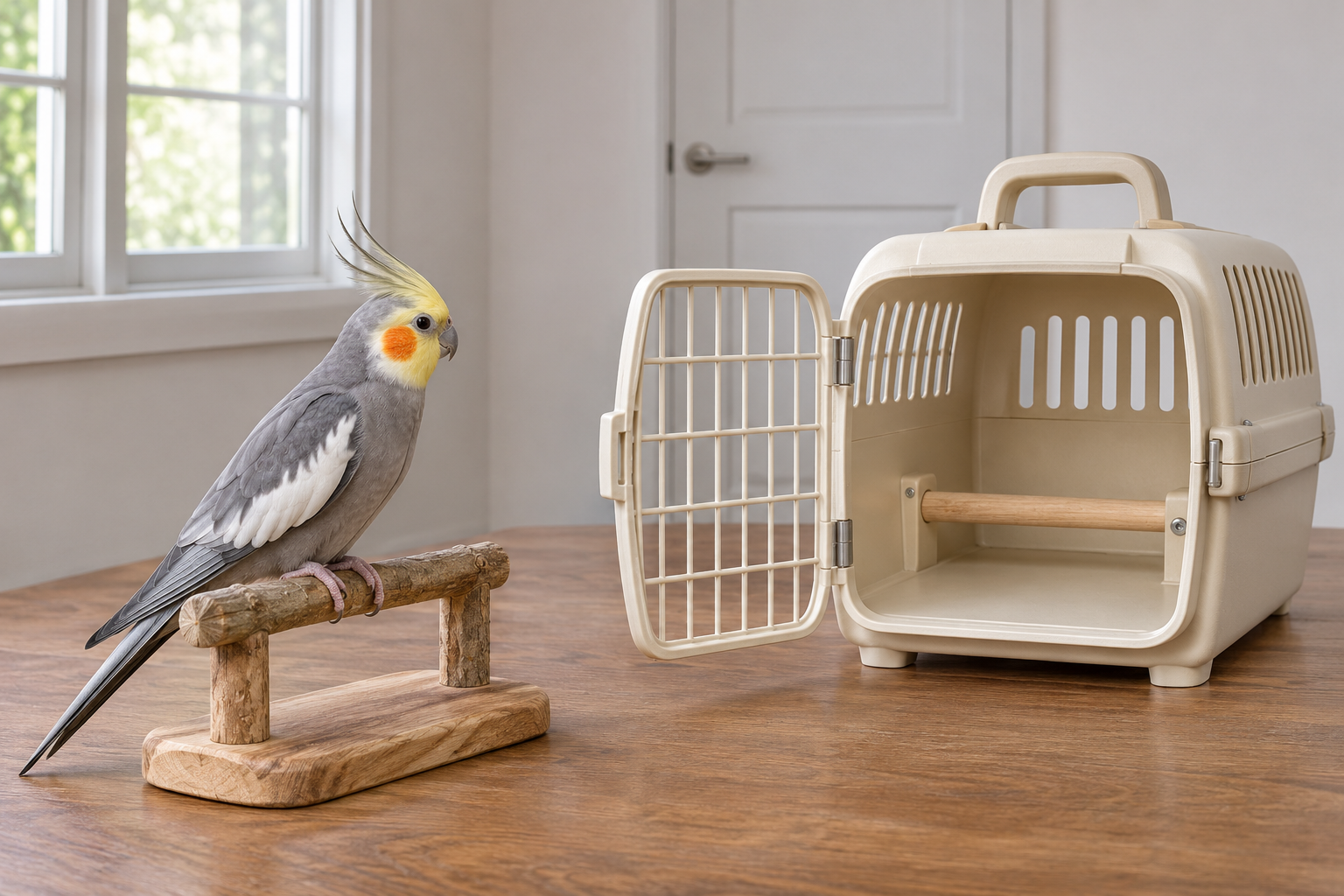
Prepared with AI assistance and primary-source checks on November 2, 2026. This general editorial article has not been reviewed by a veterinarian and does not provide an individual training or transport plan. The featured image is an AI-created illustration, not a tested product or a documented training session.
Prepared with AI assistance and source checks. General editorial information; no veterinarian-review claim. Report a correction.