A packet can say “with vitamin C” while leaving an owner with a more useful question: what is each guinea pig actually eating today? The answer involves the fresh food, the pellet bag, and the animal at the feeding area. It cannot be settled by the largest number on a supplement label.
Guinea pigs need vitamin C in their diet because they cannot make it themselves. That makes a dependable food routine important, but it does not make every bottle, fortified pellet, or colorful treat an interchangeable solution. Start with the current diet and take uncertainties to a veterinarian who treats guinea pigs.
Keep hay at the center of the meal
Vitamin C deserves attention within the whole diet. The RSPCA’s guinea-pig feeding guidance puts good-quality hay at its foundation, available continuously, alongside suitable pellets, fresh foods, and clean water. Shopping for a vitamin source should not displace the ordinary foods the animals need.
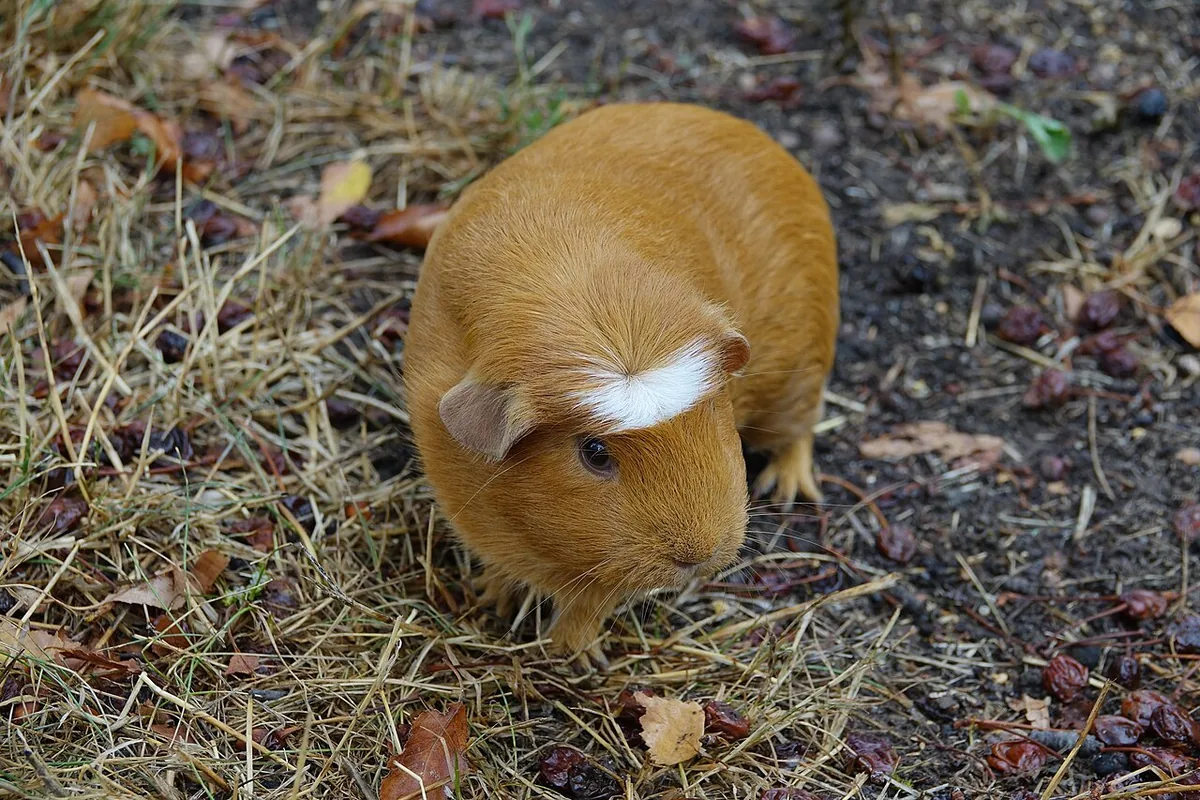
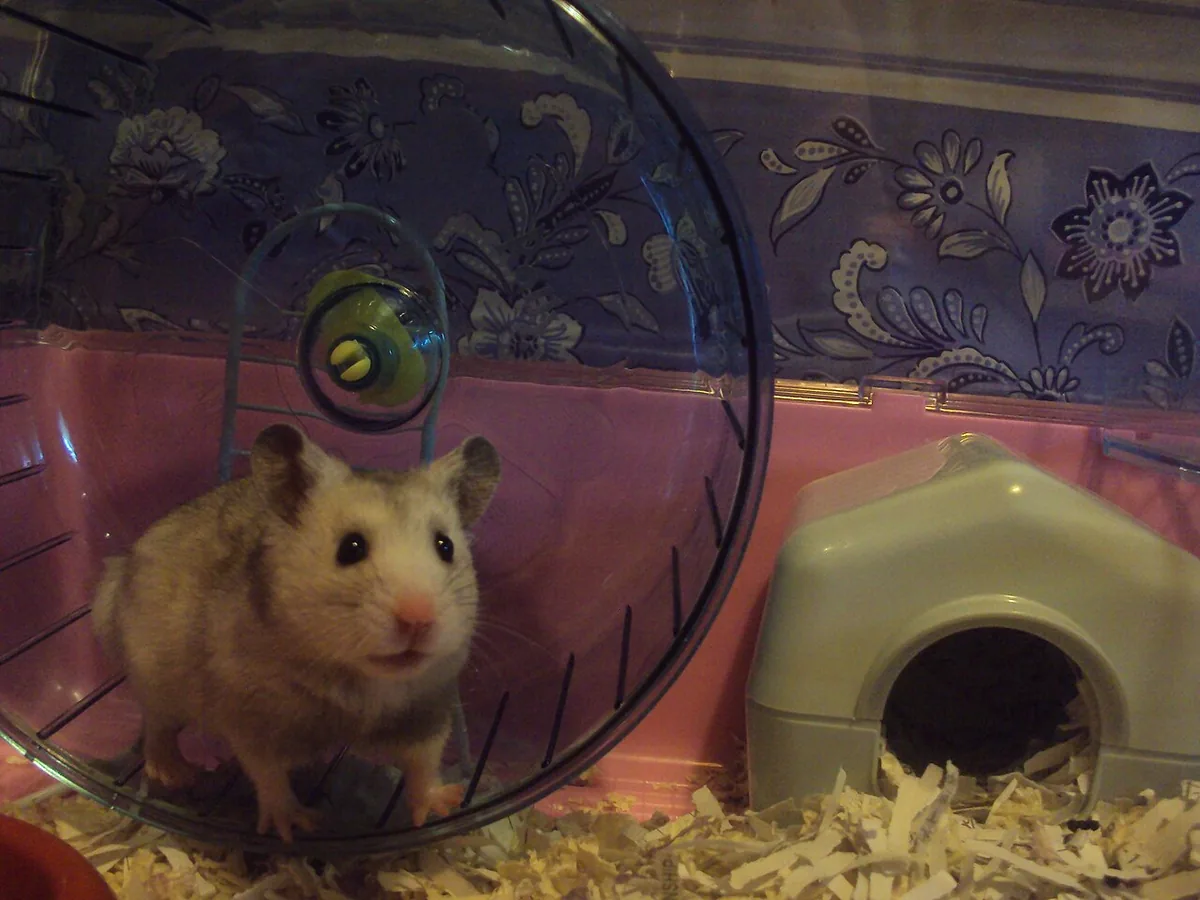
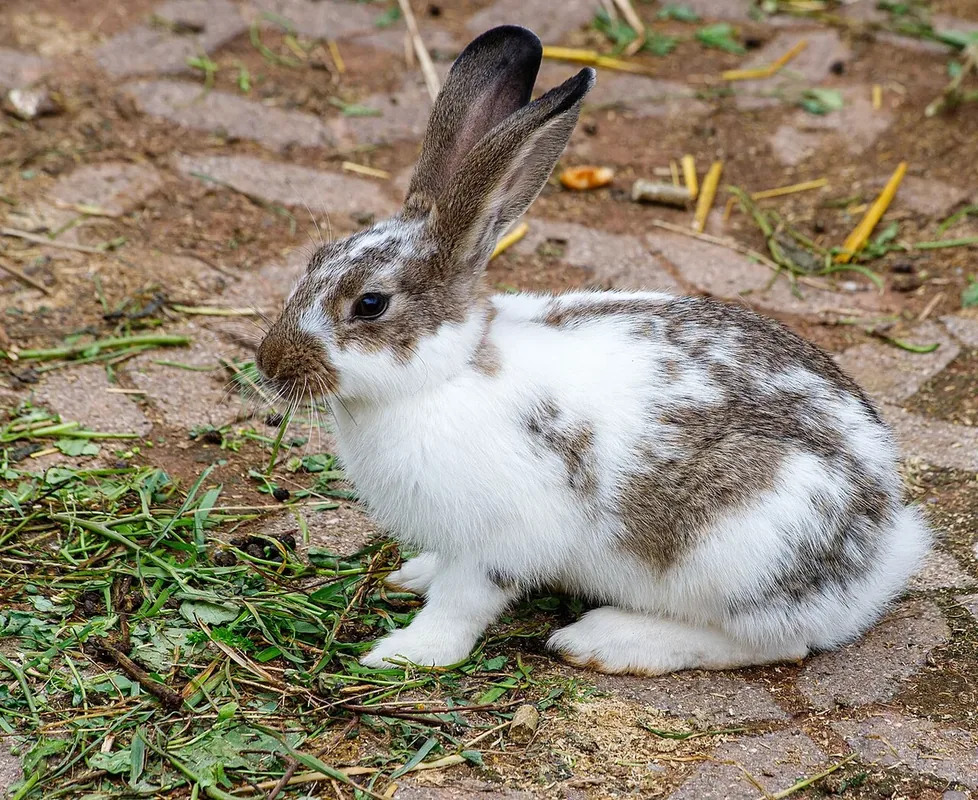
Look at an actual feeding period before changing your shopping list. Is hay accessible? Which fresh foods are offered? Are pellets specifically formulated for guinea pigs? If the household has several small-pet species, check the complete product name. A rabbit food bag beside a guinea-pig enclosure can create a practical mix-up even when both pictures show a small furry animal.
A pepper can be useful without becoming the whole menu
North Carolina State University’s Veterinary Hospital identifies bell peppers as a useful dietary vitamin C source. Its guidance cautions against relying on fortified pellets as the primary source because the vitamin breaks down with time. That is a reason to review food variety and freshness, rather than assuming an unopened-looking bag guarantees the same contribution indefinitely.
Ask your veterinary team which vegetables, quantities, and preparation suit your animals’ complete diet. A food can be suitable in principle while the amount still needs thought. Introduce unfamiliar foods gradually; do not replace an established menu overnight after reading a new list. Photograph your usual portion beside the measuring tool if explaining it at an appointment is difficult.
Check the pellet bag before topping up the bowl
The RSPCA advises giving a fresh pellet portion instead of repeatedly topping up old food, and using the product within its best-before date. Vitamin C deteriorates over time, with air exposure accelerating the loss. Keep the package information available so you can check storage instructions and identify the food accurately.
One useful household change is to put the opened bag and its date where the feeder can see them. A decorative container may be convenient, but retain the original label and follow the manufacturer’s storage directions. Buying an oversized bag is not automatically economical if much of it remains unused. Review how quickly the household uses the product before buying the next size.
Keep the drinking water straightforward
PDSA’s veterinary feeding advice does not recommend adding vitamin C supplements to drinking water: light weakens the vitamin, and the changed taste may discourage drinking. The university hospital also advises against these water additives. Keep clean drinking water available and discuss any existing additive routine with your veterinarian.
There is a second practical difficulty with relying on a shared bottle: seeing the water level change does not tell you how much a particular animal received. Do not turn an uncertain supplement plan into a reason to restrict water or separate established companions casually. If a supplement is recommended for an individual, obtain the exact product, amount, administration method, and follow-up instructions from the clinic.
Watch the individual, not just the empty dish
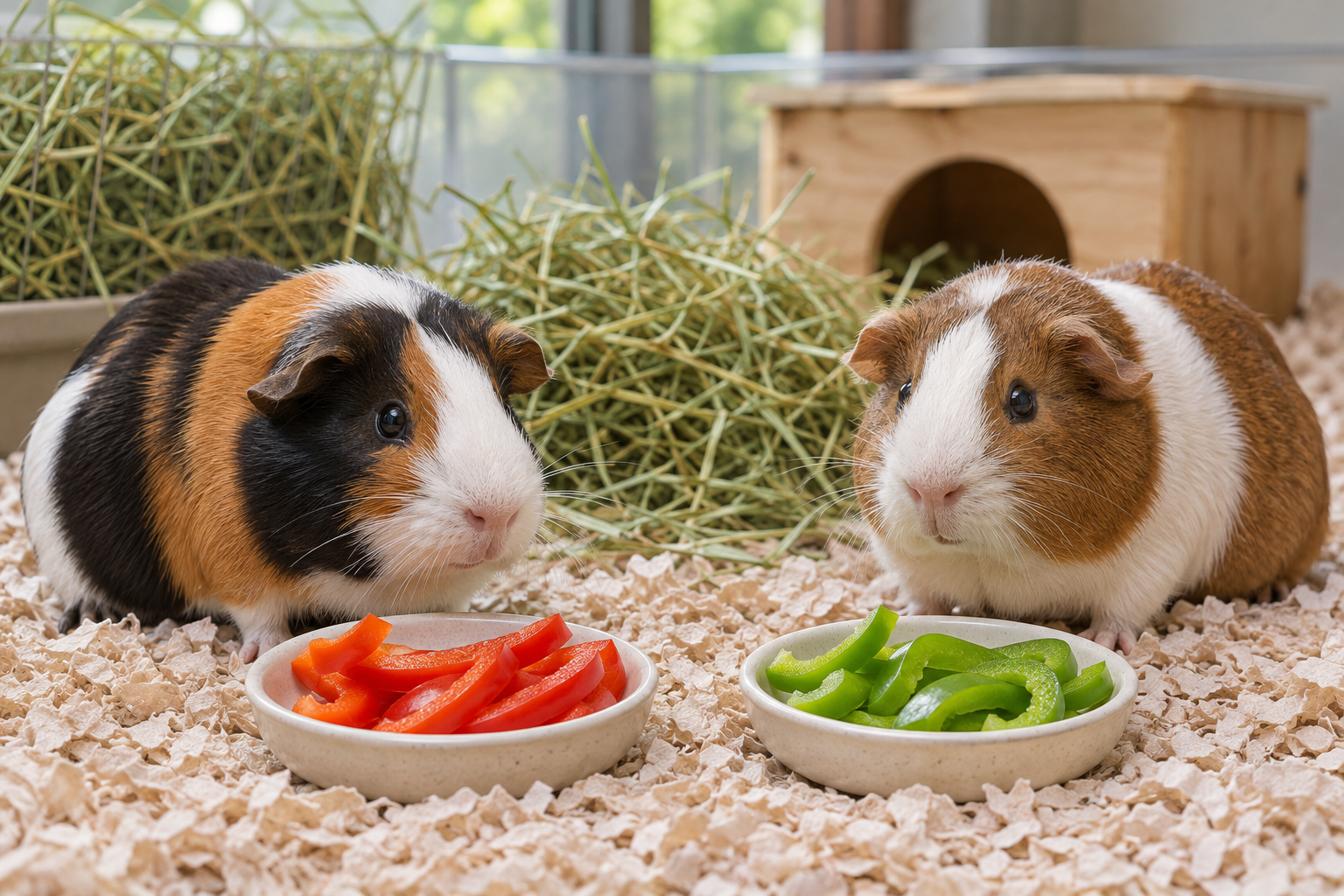
Imagine two guinea pigs approaching a shared vegetable dish. Later, it is empty. That observation confirms food disappeared; it does not establish how it was divided. Quietly watching both animals during their normal feeding routine gives you something more useful to discuss than an assumption that each ate half.
Our guide to planning daily life for two guinea pigs considers access to resources and compatible companionship. Keep those needs in view when reviewing feeding. Avoid an experiment that creates distress simply to produce a tidier record.
Know when the question needs veterinary attention
Reduced eating, fewer droppings, unusual quietness, or another concerning change calls for prompt veterinary contact. North Carolina State’s guidance emphasizes that guinea pigs can conceal illness. Do not assume a change means vitamin C deficiency, try a supplement as a diagnostic test, or wait for a food diary to be complete before seeking help.
For an ordinary diet review, bring the current food labels, a description of fresh foods actually eaten, and details of any supplements. If someone else feeds the animals, add the agreed routine to a species-specific small-pet care sheet. A useful outcome is a clear answer about this diet, with an individual plan where needed—not a collection of products that all promise the same nutrient.
Editorial disclosure: Prepared with AI assistance and primary-source checks by Pet Living Magazine. This article has not received an independent veterinary review and does not prescribe a supplement dose. The featured image is an original AI-created illustration; it does not specify feeding portions or depict a documented animal-care session.
Prepared with AI assistance and source checks. General editorial information; no veterinarian-review claim. Report a correction.